How bean-to-bar chocolate is made at MayHawk
In chocolate, the taste you notice — or don’t — is decided long before the foil wrapper comes off. Every stage between the cocoa bean and what the craft chocolate becomes is a choice. At MayHawk we don’t rush the stages — we give each one the time it needs — because this is where the flavour in chocolate is actually decided, one calibrated stage at a time. Our chocolate is ethically sourced and single-origin, so when you taste our two-ingredient chocolate, made with just cacao and unrefined cane sugar, it often reminds a person of something specific, and this is often specific to each person. We also don’t add any Emulsifiers or Food Additives.
Sourcing
Almost everything you’ll taste is already in the cacao before it reaches us — how it was grown, who grew it, the days it spent fermenting on the farm. No later stage can add what the cocoa bean doesn’t already hold, only mask or modify it — by blending origins together, or reaching for flavour additives like extra cocoa powder. So we start by choosing high-quality single-origin cacao, so the origin can speak clearly instead of being blended into silence. At the Studio the beans are sorted and checked by hand for foreign materials, and small batches are tested for consistency and flavour potential, before anything moves forward.
Roasting
Roasting is the moment the bean’s flavour is either drawn out or flattened — it is an important step in flavour development. Poor quality cocoa beans in industrial practices are roasted too high and long, reducing them down to a single dull note; while an inexperienced roaster roasts too light, or too short, and the cocoa bean stays raw and sharp. There’s no single setting right for every origin, so we don’t use one. At MayHawk each single-origin bean gets its own roasting profile — dark roast, light roast, or somewhere in between — a small batch is roasted and tested before full production.
Cracking and Winnowing
A quiet stage, but the chocolate is only as clean as what’s left in it. Once roasted, the cocoa beans are cracked open, and the papery husk — the bean’s outer shell — is lifted away in a process called winnowing. What’s left behind is the nib: the only part of the bean that goes on to become chocolate. The unwanted husk isn’t wasted — it’s composted at the Studio.
Grinding
This is where texture is decided. The nibs and other ingredients are ground down to around 20 microns, so nothing is left for your tongue to catch — no grain, no chalk, just smoothness. We grind slow and cool, on granite stone, because uncontrolled heat, held too long, reduces the very aromas the roasting worked to build. Faster would be easier. It would also taste of less.
Conching
Conching decides whether chocolate tastes clean or sharp on the finish. After grinding, the liquid chocolate is worked long enough, and warm enough, with precision, for the harsh edges to lift and the texture to settle. Sometimes we double-conche it, resting the chocolate in between stages. Conching for 24-36 hours helps release all of the unwanted volatiles from the chocolate. Heating, stirring and scraping is the basic premise of conching, it’s a natural way of emulsifying the chocolate — we use a rotary conche, these were some of the first machines we built when the company was founded. Most industrial chocolate has an emulsifier added at this stage. Ours never does.
The Studio’s Own Ingredients
Where a chocolate carries more than cacao — a botanical, a fermented fruit — this is where the Studio’s own work enters. Some botanicals we grow ourselves, and to other ingredients we add nothing artificial, instead we use traditional ways of preserving that have stood the test of time. We also interrupt the stages of chocolate making, wherever the ingredient calls for it, to introduce innovative methods — Double-Fermented Cacao, Rum-Soak, and other botanical additions to the cacao.
Tempering
Tempering is the skill of making chocolate solid with a clean break and a glossy look. A good temper also controls the way it softens the moment it meets your mouth, rather than sitting waxy. All of that is set here, bringing the cocoa butter to its one stable form, Form V. Get it wrong and good chocolate turns dull and crumbly. Get it right, and every other stage’s work finally shows.
Moulding and Finishing
Tempered, moulded, set, packaged, finished — this is the point the process becomes the chocolate you’re holding, in packaging designed in-house. Not one stage of it left the building.
Chocolate, stripped back to the essentials
Nothing was done here that the chocolate didn’t need. Every step was a choice — to keep something, reveal something, or leave something alone — never to hide a fault. This is Beautiful Chocolate, by Design.
More information on our chocolate
What does bean-to-bar mean?
Bean-to-bar means making chocolate from processing fermented and dried cocoa beans in-house — roasting, grinding, conching and tempering, all under one roof. For a more in-depth look at the term see the article: Craft Chocolate: It’s Past and Future.
At MayHawk it also means using the fewest possible ingredients, sourced ethically and transparently — choosing single-origin cacao, and rejecting food additives and emulsifiers. And it means solving manufacturing challenges with inventive processes and methods, rather than allowing the chocolate to deviate from these principles. Our bean-to-bar chocolate is a chocolate made with a sense of place — a potential that needs to be uncovered, not buried.
How is chocolate made?
Chocolate begins with cocoa beans, sourced and checked before anything else happens. Cocoa beans come in three primary varietals, Criollo, Forastero, and Trinitario, although, this is overly simplistic, as there are hundreds of strains for each type. At harvest time the seeds from cacao pods, grown on cacao trees, cultivated on plantations, are fermented in bins for 4-10 days. Then they are fully dried out, either under the sun, or in warm drying houses. These are the cocoa beans that MayHawk purchases, from single-origin sources.
Roasting draws out the flavour of the fermented and dried cacao bean, while cracking and winnowing remove the outer husk to leave the cocoa nib. The nib is ground down, usually with a sweetener like cane sugar, to a smooth, fine paste, then conched — worked slowly over time until the texture and taste settle. Tempering brings the chocolate to its final, stable structure, giving it its snap and shine, before it’s moulded and finished. Where a chocolate carries more than cacao, ingredients like botanicals, vanilla or preserved fruits and nuts, these are introduced at the relevant stages of production.
Why doesn’t MayHawk use emulsifiers?
Many industrial chocolates, and some bean-to-bar chocolates, use an emulsifier — usually soy lecithin or sunflower lecithin, both classified as E322. It’s normally added at the grinding stage. Lecithin thins the chocolate and stops particles clumping together, helping it flow more easily during production. It can also reduce the amount of cocoa butter needed to achieve the same flow during manufacturing. We don’t use any emulsifiers in our chocolate. Instead, we rely on time and careful conching, giving the chocolate the hours it needs to develop the flow, texture and flavour that other manufacturers may achieve with emulsifiers. The result comes from time and process, not from using E322.
What ingredients are in MayHawk chocolate?
Our chocolate is made from just cocoa beans and unrefined cane sugar. Some recipes also include cocoa butter, natural botanicals, fruits, nuts or other natural ingredients prepared by the Studio. We never use emulsifiers, artificial flavourings, preservatives or palm oil.
What is the Food Hygiene Rating for MayHawk in the UK?
FSA Food Hygiene : The FSA MayHawk Page is rated as 5 out of 5 with ‘very good’, the top grade, across the board. Unfortunately they don’t use the terminology ‘excellent’ and ‘very good’ is their top rating, but if they did, we would have an excellent rating as this is something we take seriously. We also have a HACCP reporting system (Hazard Analysis Critical Control Point) used to keep food safe. It looks at biological, chemical, and physical dangers to stop food problems before they happen.
Our best ideas come from curiosity, connecting ingredients and processes in new ways.
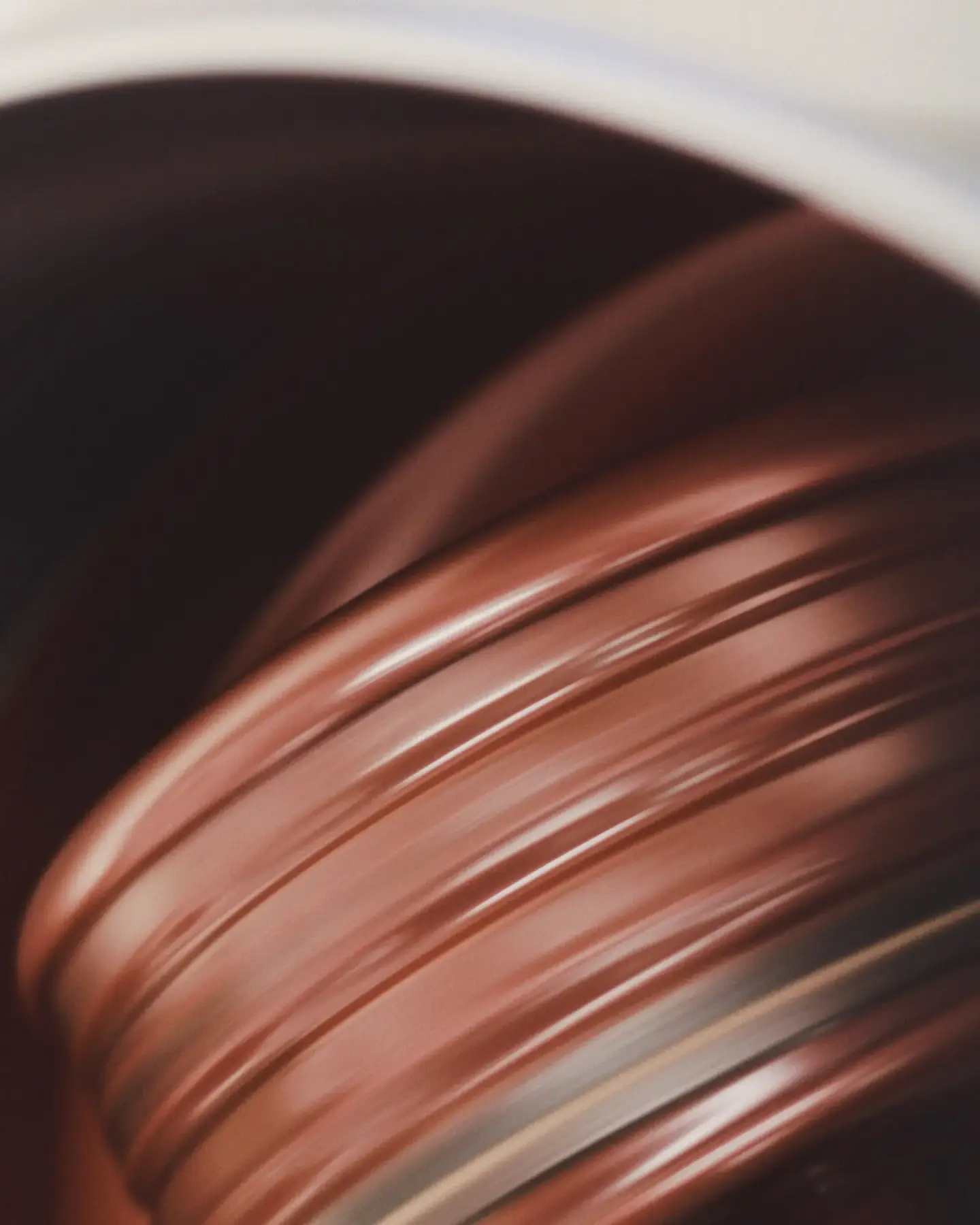
New profiles of bean-to-bar chocolate being stone-ground.
The Chocolate Studio, since 2007
All of our creative choices grow out of the research we do and the many chocolate samples we make and compare.
The lab in the Studio is a place of focus and curiosity, where the raw materials are studied and developed. It is where early ideas take form, and the work ahead is planned.
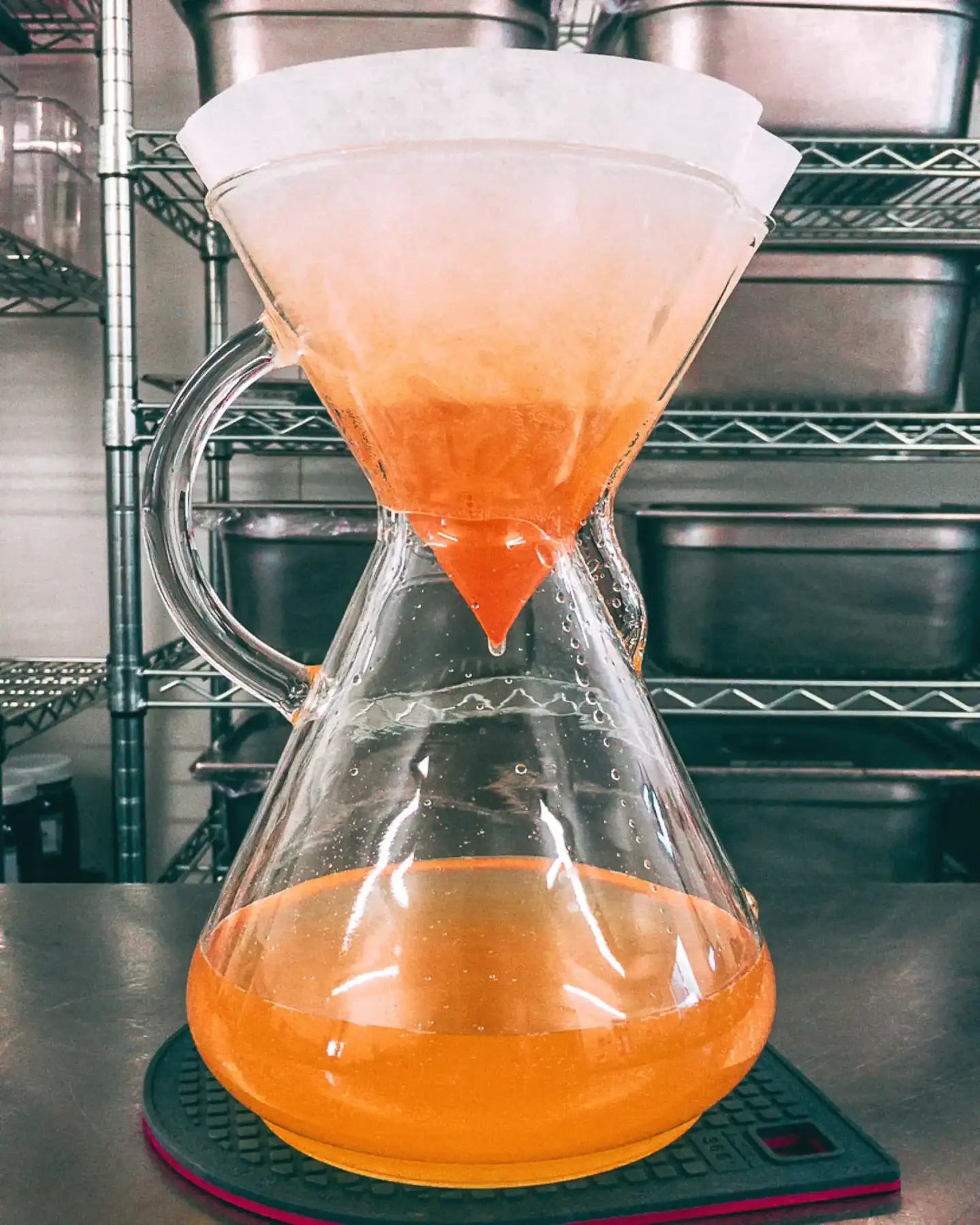
Filtering tomato juice from the fresh tomatoes we grow.
The working space
The Studio gives us the room and the tools to experiment with ingredients, processes and methods.
For each new chocolate we usually develop new processes, or adjust the ones we have. Balancing creativity with production is a real part of the work.
Behind every MayHawk bar is a process the Chocolate Studio created to make it possible.
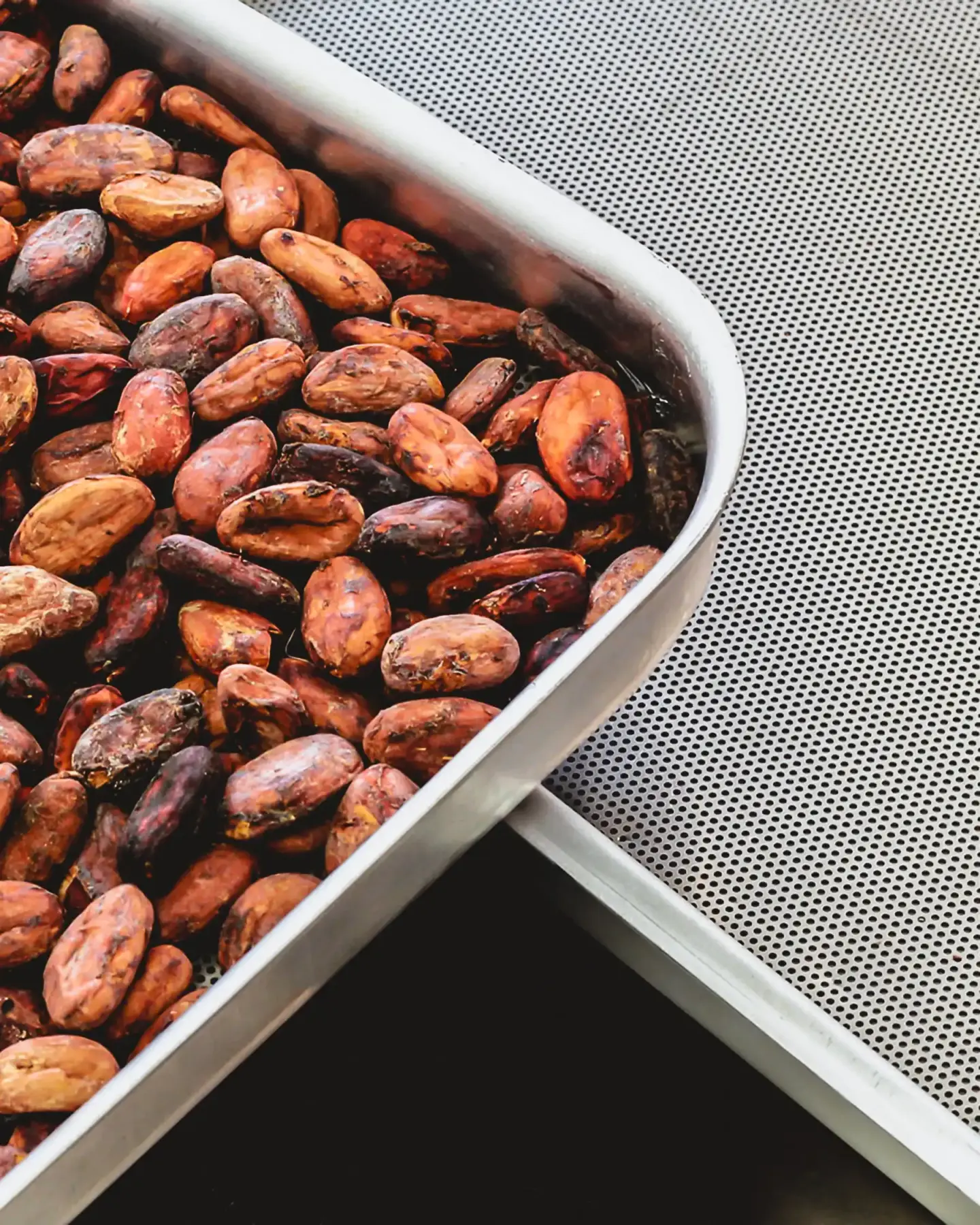
Researching the right roasting profile for our single-origin cocoa beans can make a big difference.
Unique profiles
Precision roasting, grinding and conching shape everything. The Studio perfects the single-origin profiles at the heart of our chocolate.
Understanding the science at every stage is fundamental to better chocolate. When we focus on that, we find it’s where the real gains are.
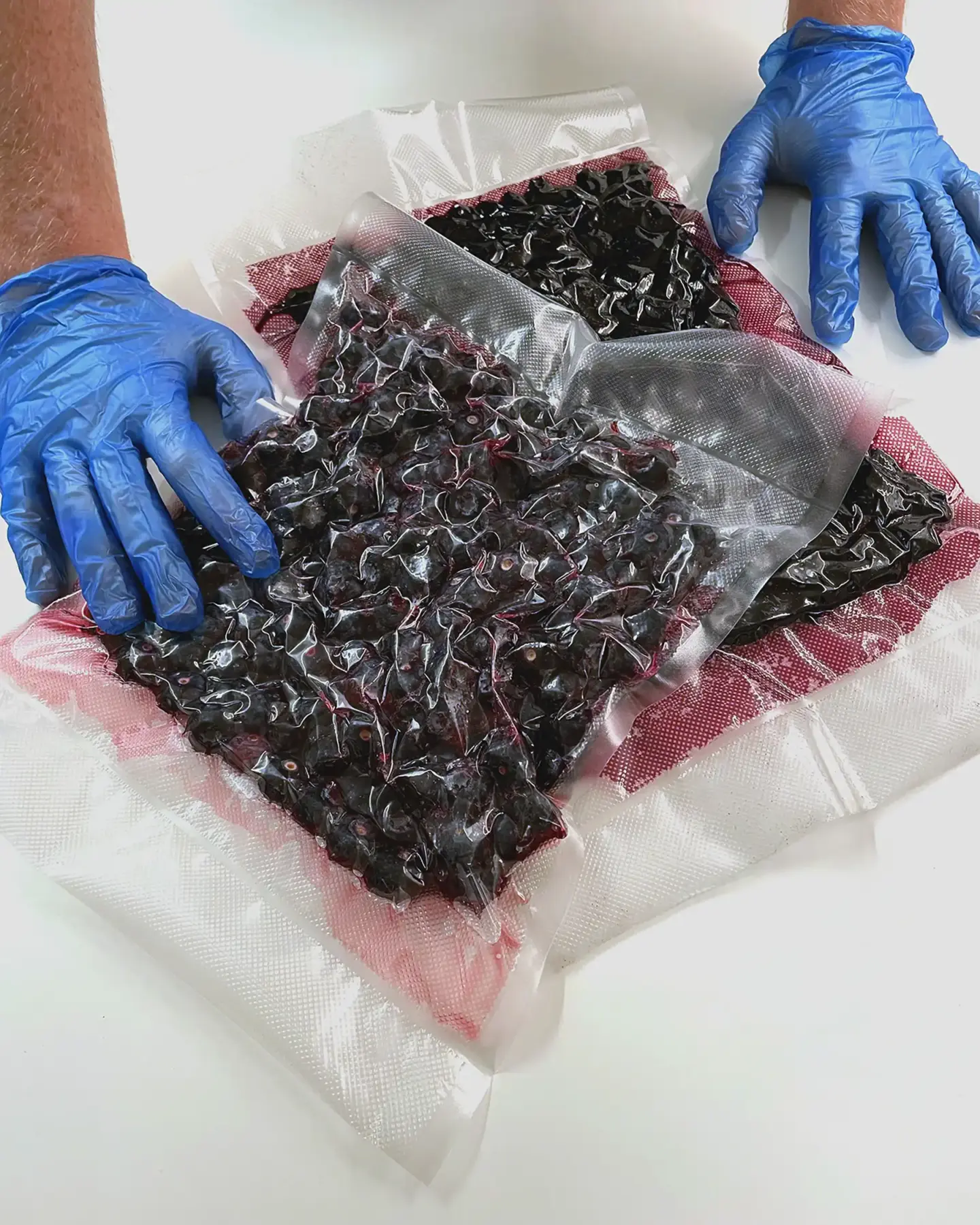
Fresh blueberries lacto-fermented in sea-salt, bringing little bursts of acidity, saltiness and sweetness.
Natural ingredients
We experiment with natural ingredients and preserving methods to find new ways of creating inclusions for our bars.
A large part of our work centres on natural ingredients. We add no artificial preservatives, working only with methods of preserving that have stood the test of time. So how do we make these ingredients better? How do we make them last?
We reimagine industry-standard methods and processes to find new ways of making better chocolate.
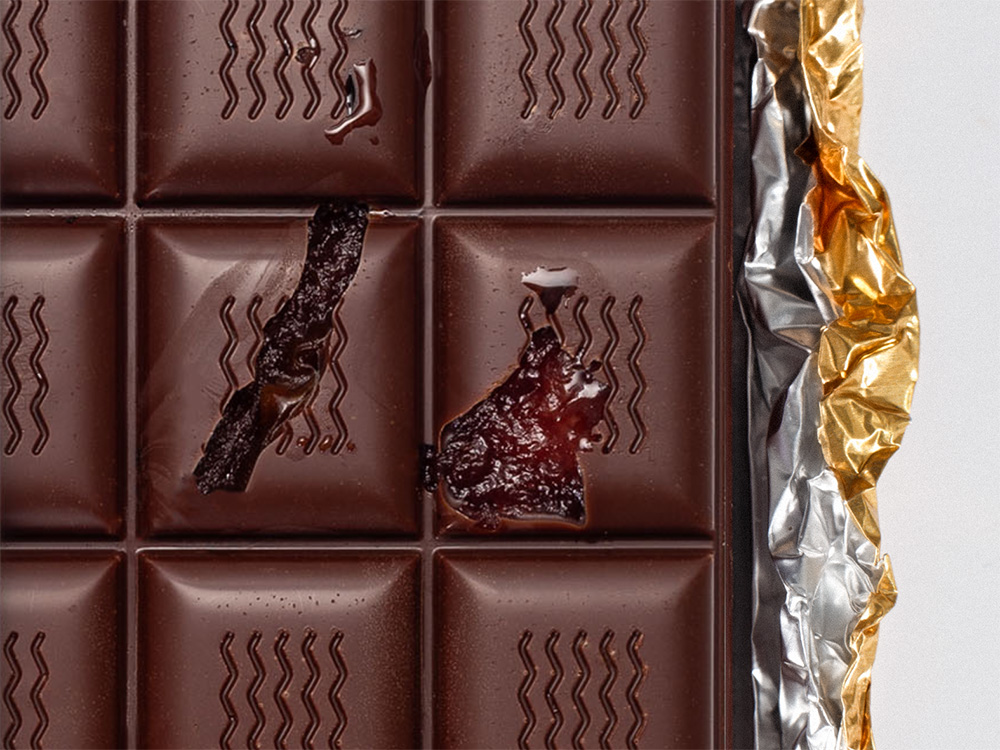
The ideas behind the Edition and Project bars are born in the Chocolate Studio.
A new point of view
The Chocolate Studio has always been a place where we look for a new perspective on established methods and processes.
New is not always better — this distinction matters to us. Anything new has to show a real improvement. Our Studio Edition and Projects Bars are closely linked to this research. Each limited edition batch is the result of experiments in how chocolate is made and how natural ingredients are prepared.
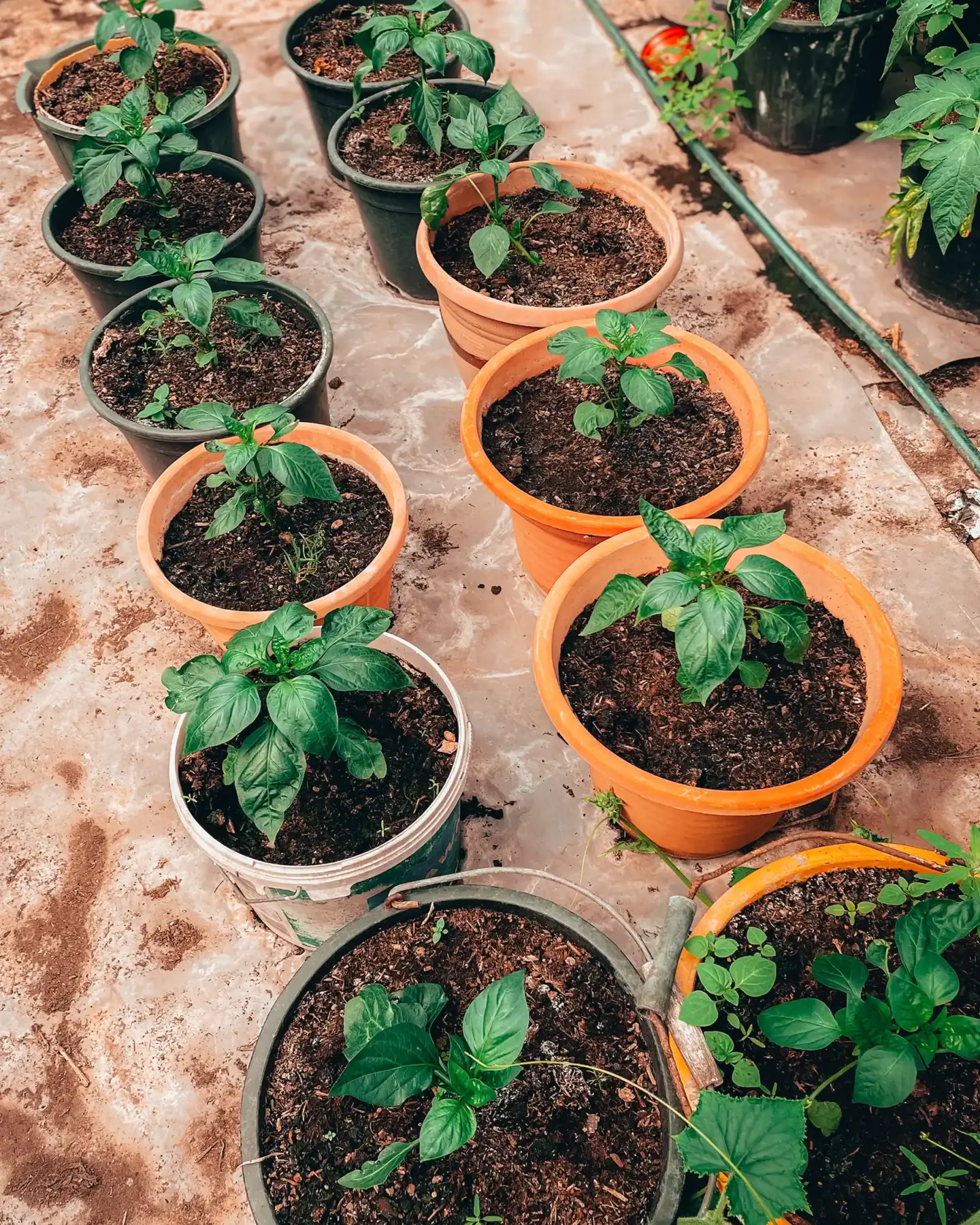
Growing the organic chilli plants we need for ingredients.
Growing ingredients
Many of the organic herbs, spices and botanicals used in our chocolate are grown in a greenhouse run by the Chocolate Studio.
Since 2012 our greenhouse has become a fully integrated part of our chocolate-making. Growing our own ingredients has taught us an entirely different set of skills.
We always look for new perspectives in the Chocolate Studio — to shape the ideas we explore next.
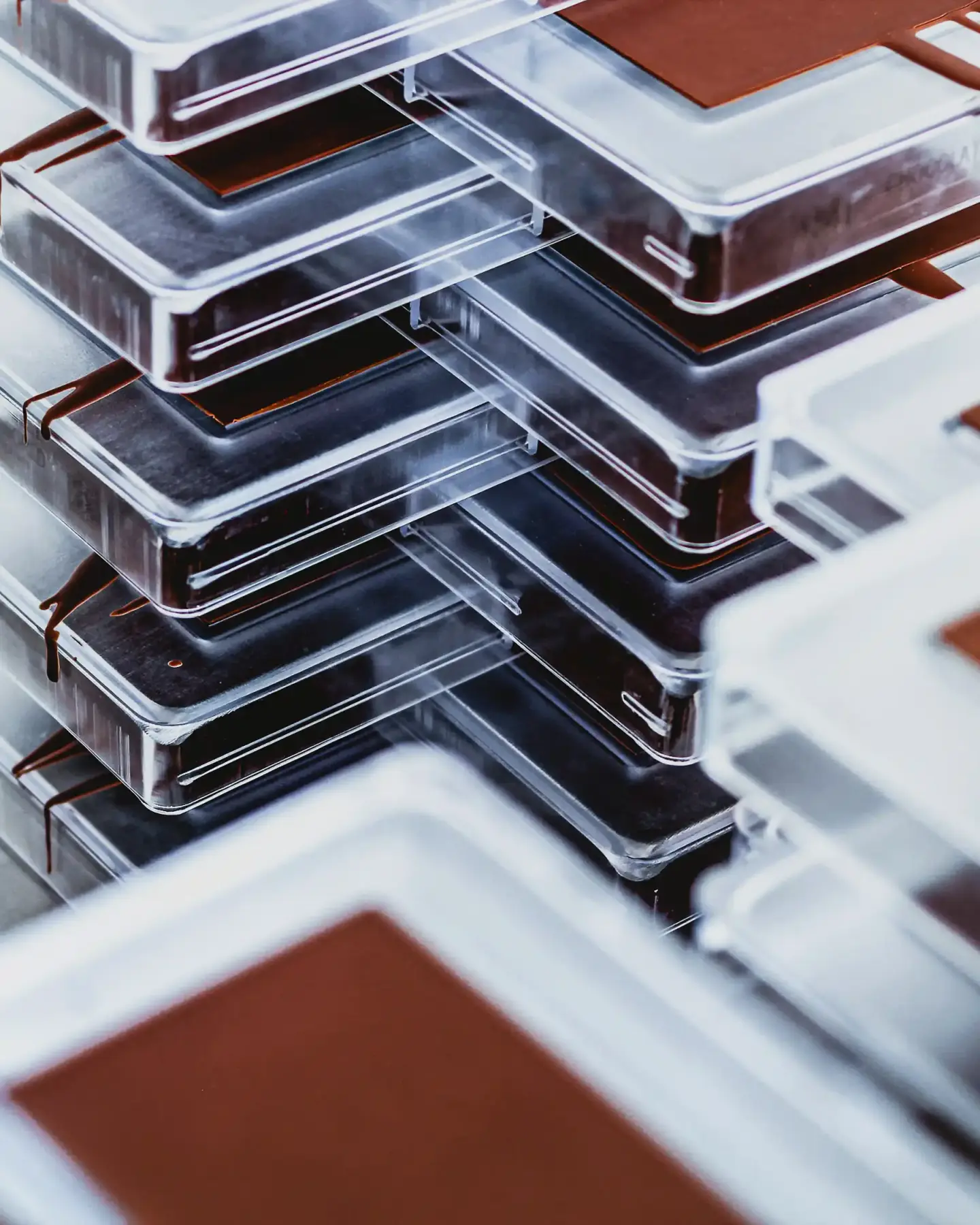
Chocolate in the moulds, means the end of the journey.
Realising our potential
Real progress often comes from finding the limits of a process or a new method, then finding practical ways past them.
The problems that come up in development are part of the work — and each one we overcome deepens our understanding.
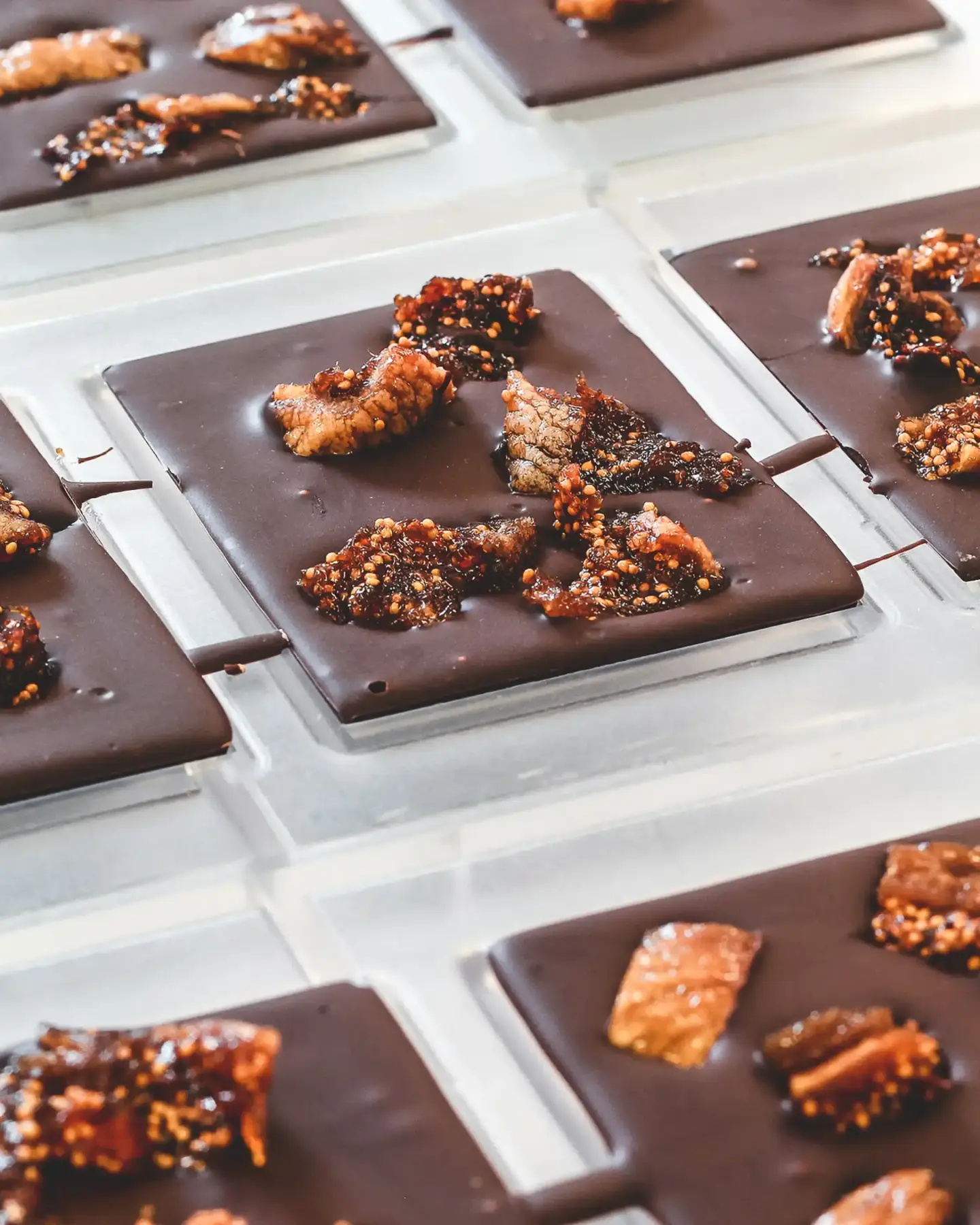
Honey Spiced Fig & Whisky. Natural ingredients are explored in new ways.
Simplicity and delight
How can we make our chocolate better? The Chocolate Studio exists to explore that question — and it shapes everything we do.
We work by removing distractions — making a simple chocolate that feels honest, shaped by a deep understanding of the ingredients.
The Chocolate Studio
Every project in the Studio begins with an idea.
The Studio is where we develop the new ingredients and processes that future projects are built on. The decisions made here define the chocolate we make and the methods we refine — a place where curiosity, careful testing, and long thinking sit together.
We could make chocolate easier. We choose to make it better.
FSA Food Hygiene : Company Page