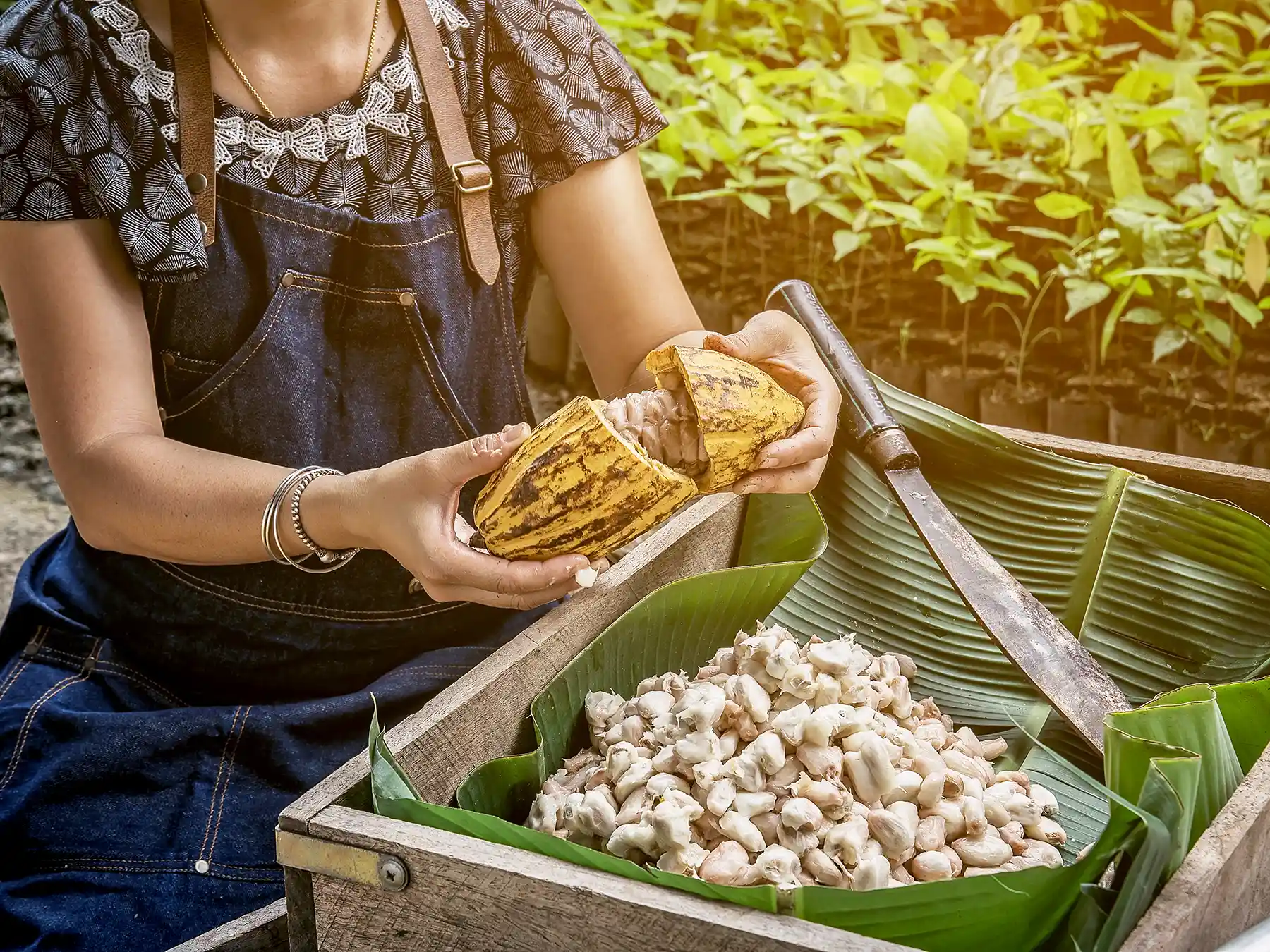
MayHawk operates with integrity and a strong commitment to ethical practices. We believe that the way we conduct ourselves is just as important to our success as the chocolate we create. The policies outlined below guide every decision we make, shaping the way we do business. Making chocolate matters — but how we make it matters even more.
Is MayHawk chocolate ethically made?
Yes. We hold our chocolate, and everyone who helps make it, to a written standard: we don’t tolerate underage, forced, or debt-bonded labour anywhere in our supply chain, and we expect every supplier to treat people with dignity and respect. Those commitments are set out in the policies below and are a condition of doing business with us.
Where does MayHawk source its cacao?
From a trusted network of ethical producers. Buying single-origin means we know who grows our cacao and under what conditions, rather than taking it on trust from an anonymous blend.
Where doesn’t MayHawk source its cacao?
Not all, but many of the human rights abuses associated with cocoa production are linked to the purchase of beans with little transparency through global commodity markets. Ivory Coast and Ghana produce approximately 60% of the world’s cocoa supply, much of which is traded through commodity markets. Research supported by the U.S. Department of Labor estimated that roughly 1.48 million children engage in hazardous work on cocoa farms across these two countries. MayHawk does not purchase cacao through commodity markets, or from the Ivory Coast or Ghana.
One of the reasons ethically sourced chocolate can cost more is that a greater proportion of its price is passed down the value chain to the people and communities where it is most needed.
Cocoa is traded globally as a soft commodity, primarily through the Intercontinental Exchange (ICE) in London and the Intercontinental Exchange/NYMEX in New York. Prices are influenced by West African and South Asian crop outputs, supply deficits and financial speculation.
Chronically low prices on commodity markets mean cocoa farmers can receive only a small fraction of the retail value of industrially produced chocolate. This can force farming families deeper into poverty, leaving them unable to afford adult labour and increasing their reliance on children to survive and work the harvest.
There are, however, other pressures that are expected to alter the balance of cocoa prices in the future. You can read more about the reasons for, and consequences of, increased research into laboratory-grown chocolate in our Insight article.
Does MayHawk use child or forced labour in its supply chain?
No. We prohibit underage, forced, and debt-bonded labour outright, across every supplier. Our Anti-Modern Slavery Policy enforces that prohibition, and our Supplier Code of Conduct makes it a mandatory condition of working with us — covering recruitment fees, fair hours, lawful contracts, and wages alongside it. If these abuse practices are discovered we would terminate our working relationship with the supplier.
Is MayHawk Fairtrade certified?
No — we work to a single-origin sourcing model instead, sourcing high quality named cacao, which lets us know who grows our cacao, and paying above market rates for it. Our in-house programmes allow us to shape our own specific environmental and social targets, without third-party auditing failures.
What standards do MayHawk’s suppliers have to meet?
Every supplier must meet our Supplier Code of Conduct: labour and human rights, health and safety, environmental responsibility, and ethical conduct, with responsible sourcing of materials built in. These standards are mandatory, not aspirational — and are set out in summary in the cards below.
Our values
We lead with our values, keeping people’s welfare at the centre of our decisions and respecting the human rights of every person our manufacturing and supply chain touches — from the people who make our chocolate to the communities where our suppliers operate.
We review supplier records as an essential part of our assessment and audit process. But we are a very small company in a vast industry, and our influence and voice can only reach so far in a space dominated by multinational corporations.
Apple’s Framework on Ethics and Compliance is a guide we use: Business Conduct Policy.
The supply chain
We make our chocolate in the UK, working with a trusted global network of suppliers to bring each of our products to life. Our supply chain covers more than 20 countries, including regions that are particularly vulnerable to economic and environmental challenges.
Within this supply chain we partner closely with companies that provide our cacao, sugar, and other key ingredients, as well as those who support the logistics, packaging and retail operations that help deliver MayHawk chocolate to customers worldwide.
MayHawk does not tolerate underage, forced or debt-bonded labour within its supply chain.
Supplier Responsibility and Standards (SRS)
We believe that all people, wherever they are in the world, deserve to be treated with dignity and respect. Upholding their human rights is central to our Supplier Responsibility and Standards policy (SRS).
Our SRS policy aligns with the United Nations ‘Protect, Respect and Remedy‘ framework and works alongside MayHawk’s Anti-Modern Slavery Policy, which enforces our strict prohibition of all forms of modern slavery, including forced labour and human trafficking, across our supply chain.
We use the SRS policy to guide our business decisions, including which suppliers to work with and which materials to use in our products.
Supplier Code of Conduct (SCC)
Our Supplier Code of Conduct (SCC) sets out our strict requirements in labour and human rights, health and safety, environmental responsibility, and ethical conduct. These standards are mandatory for all suppliers wishing to do business with MayHawk.
The SCC addresses key human rights issues — preventing discrimination, abuse, the charging of recruitment fees, and forced or underage labour — and establishes clear expectations for fair working hours, wages, benefits, and lawful contracts.
It also requires suppliers to take meaningful steps to minimise their environmental impact, including the responsible sourcing of materials.