Single Origin Chocolate
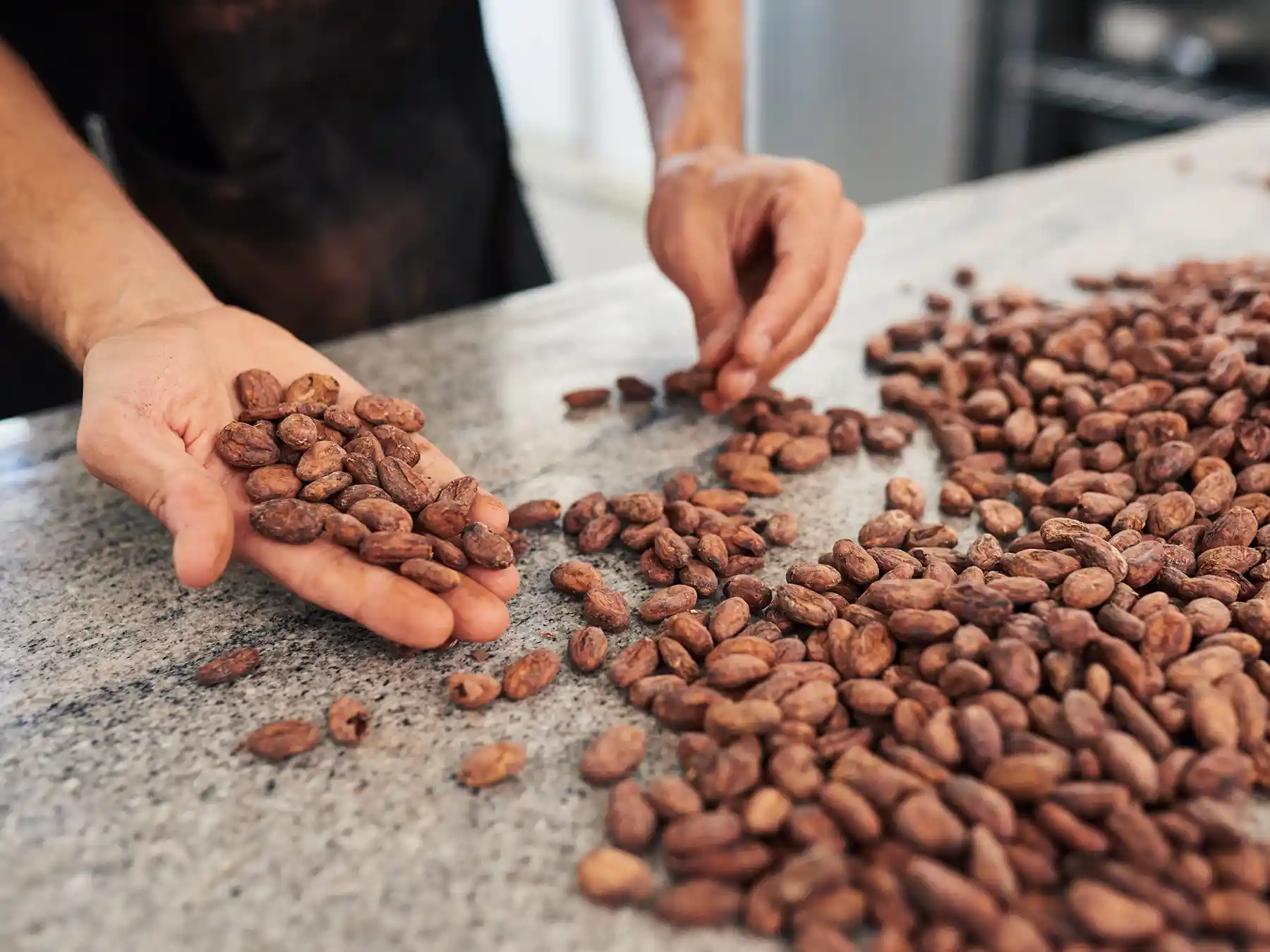
We make all of our chocolate bean-to-bar, from ethically sourced single-origin cocoa beans.
What does single-origin chocolate mean?
Single-origin chocolate is made from cacao grown in one country, region, or by a single producer — rather than blended from many sources at once. Each origin carries its own variety of cacao, its own soil, altitude and climate, and its own character because of them. All MayHawk chocolate is made bean-to-bar from a single-origin source.
Why does MayHawk use single-origin cocoa beans?
So the character of each origin — its variety, soil and climate — shapes the flavour of the finished chocolate, rather than being diluted by cacao from other regions. It’s a flavour decision before anything else: the potential of each origin, left intact. You can see the origins we work with further down this page.
Is single-origin chocolate better than blended chocolate?
For unique flavour, yes — and that’s why we make it. Blending mixes many origins into one taste that never changes; it’s built for sameness, and character is the first thing it flattens. Single-origin keeps one place, one variety, one harvest intact — so you taste the cacao, not a formula. Sameness is the industrial goal. It isn’t ours. More on how origin shapes flavour.
Does single-origin chocolate taste the same every time?
Not exactly — and that’s by design. Because we don’t blend across origins to force a fixed profile, and because cacao is a seasonal, agricultural product, the flavour can shift a little between harvests and batches. A single-origin chocolate reflects the crop it was made from. We calibrate each batch to its character rather than erase it — more on this on the Chocolate Studio page.
What does cacao variety mean?
Like wine grapes, cacao has genetic variation that can influence flavour, aroma, acidity and bitterness. The names Criollo, Forastero, and Trinitario describe three broad groups of cacao, but variety alone does not determine how a particular chocolate will taste. Where the cacao grows, how it is fermented and dried, and how the chocolate maker roasts and processes it all influence what eventually appears in the bar.
In broad terms, Criollo cacao is often associated with a more delicate flavour profile, lower bitterness and aromatic complexity. Trinitario has mixed ancestry and encompasses a much wider range of characteristics, often combining pronounced chocolate flavours with fruit, nut or floral notes. And Forastero is robust and direct, with a strong cocoa character, sometimes with a pronounced bitterness and limited complexity. This is a deliberately simplified description of cacao genetics, using broad categories to make the differences easier to understand. For a more detailed explanation, read our article: Genetics of Fine Chocolate.
Why do fermentation and drying methods differ between origins?
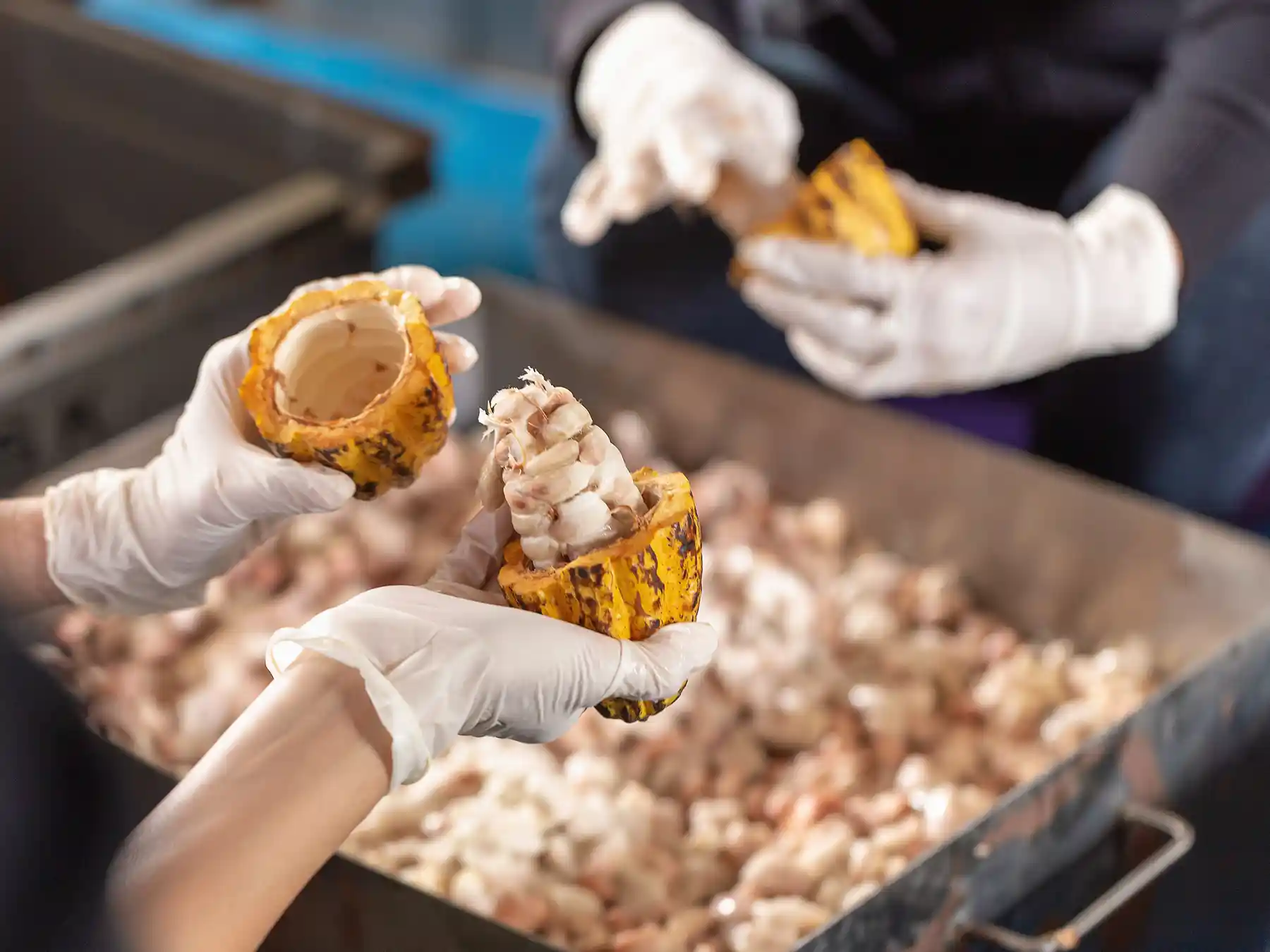
Cacao fermentation is not a standardised industrial process. After the cacao pods are opened, the fresh beans and the sweet fruit pulp surrounding them are placed together to ferment. Naturally occurring yeasts and bacteria break down the sugars in the pulp, generating heat and beginning a series of changes inside the beans that are essential to developing chocolate flavour.
Fermentation is carried out by individual farms and cooperatives, each working within the conditions and traditions of their region, climate and available equipment. Both the method used and the length of fermentation influence the flavour of the finished chocolate.
Cacao may be fermented in tiered or non-tiered boxes, with fermentation periods ranging from around three to eleven days. During this time the cacao can be turned to introduce oxygen, distribute heat and help control the fermentation. Different origins therefore use different combinations of time, movement and equipment to achieve the results they want.
The tiered box system works by allowing the fermenting cacao mass to be transferred between boxes at intervals. On a steep bank, or concrete steps, rows of fermentation boxes are fixed into position.
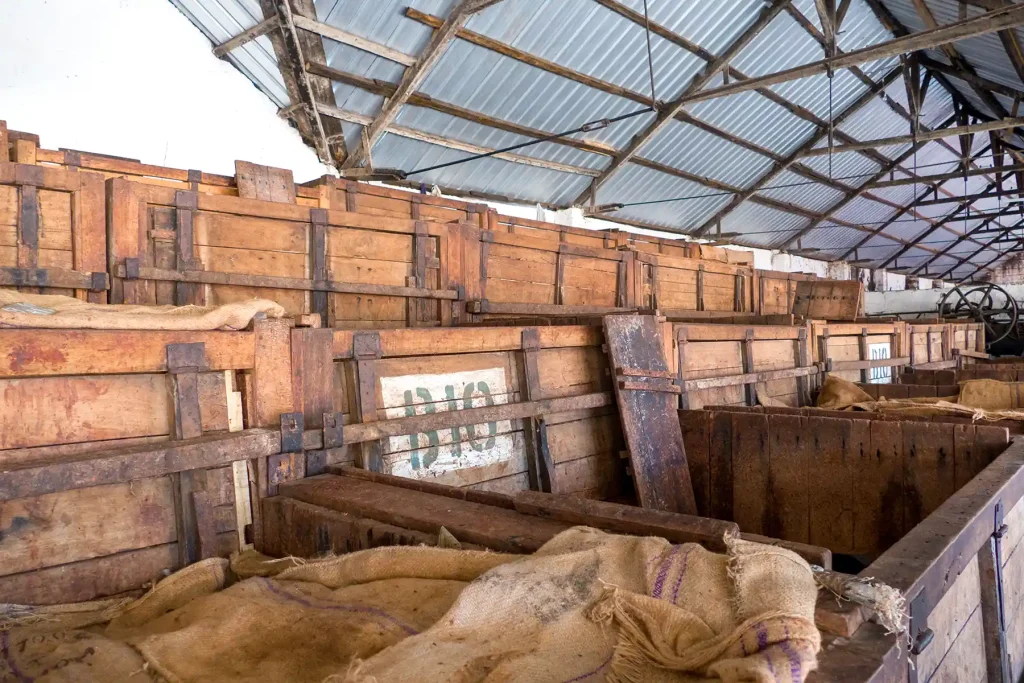
Three-tier fermentation box system
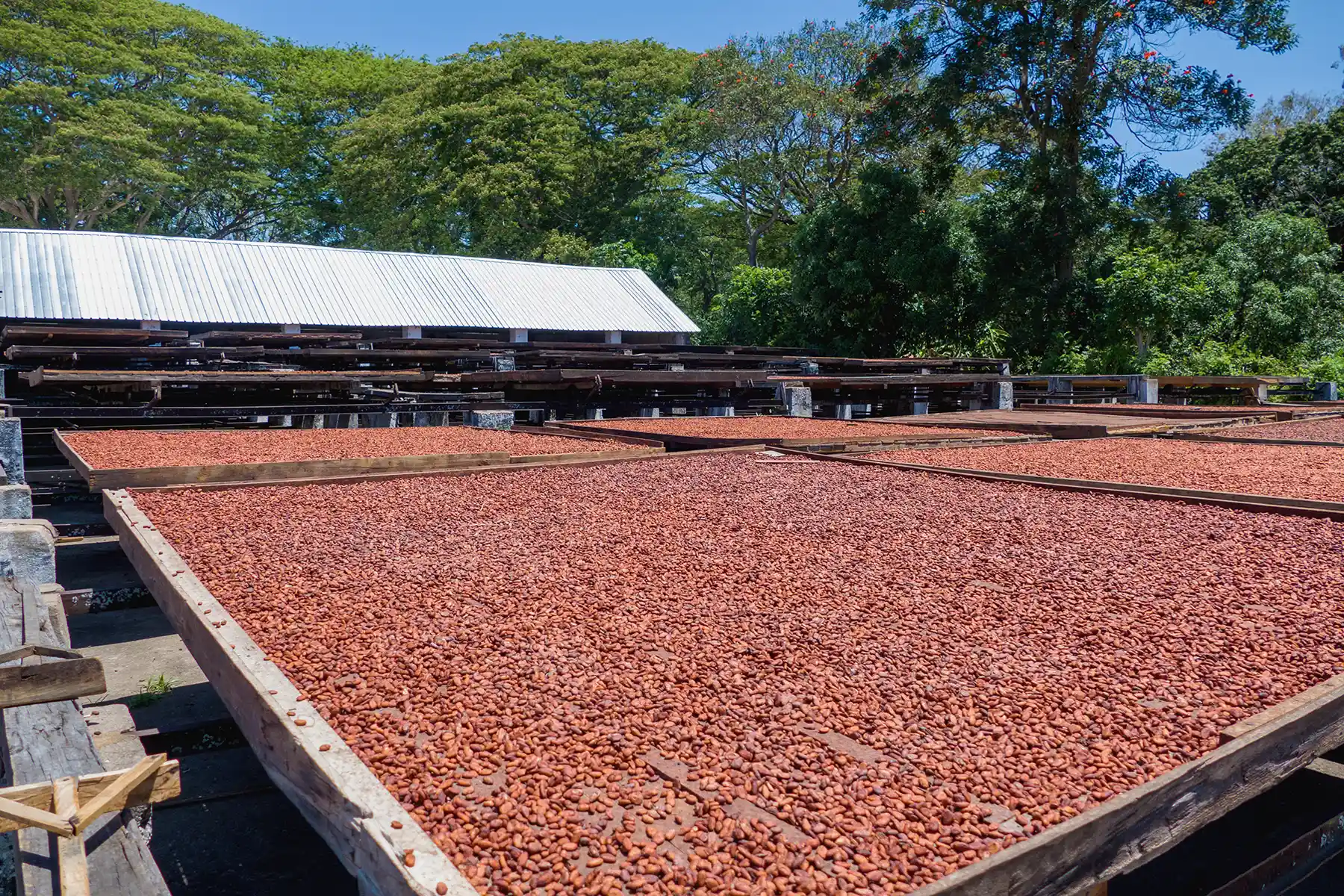
As the beans move from the upper box to the lower, they are turned and exposed to oxygen. This controlled movement manages the temperature and acidity of the fermentation, encouraging the development of complex flavour compounds while preventing over-fermentation. The number of tiers reflects the scale of the operation and the specific fermentation protocol developed for that origin. Common systems: Colombia often uses a linear single-tier box system, where the beans are turned within the same box rather than cascaded. Some Peruvian plantations use a five-tiered system, allowing more frequent and gradual movement. Many of the plantations in Madagascar use a three-tiered cascade, the method most commonly associated with the Sambirano Valley and the fine cacao produced there.
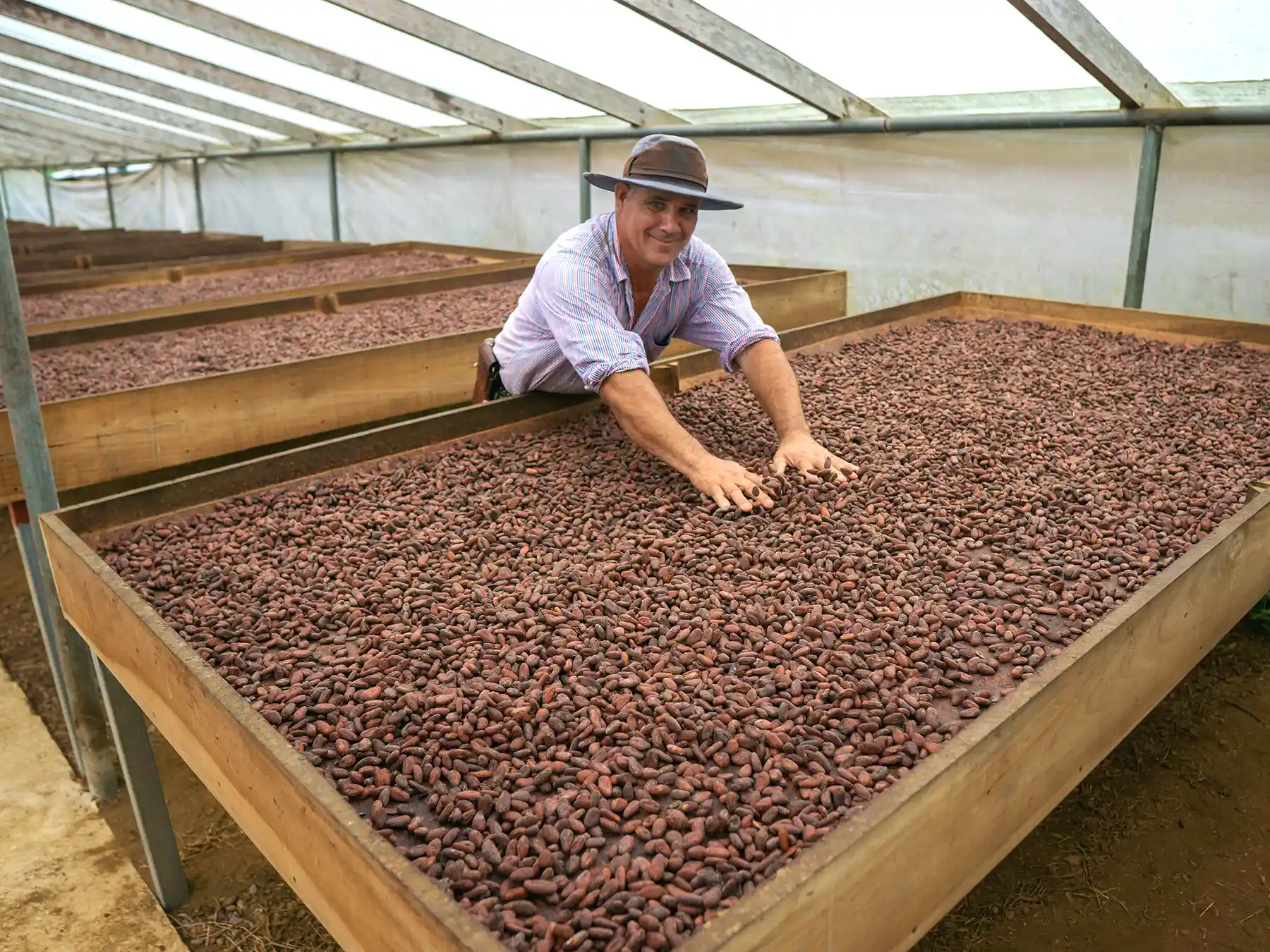
Drying is equally consequential. After fermentation, the beans must lose moisture slowly and evenly. Too fast and the outer shell hardens before the interior has dried, trapping acids that produce harsh, unpleasant flavour. Too slow and mould develops. The method used, whether raised wooden beds, cement patios, or open-air drying, reflects the local climate and the level of control the producer wants to maintain over the drying rate. Colombia’s greenhouse coverage protects against sudden rainfall in the Andes. Peru’s cement patios with coverage manage the humidity of the valley floor. Madagascar’s open-air raised beds take advantage of the consistent Sambirano sunshine. The fermentation, the drying, the climate. All of it arrives in the bar.
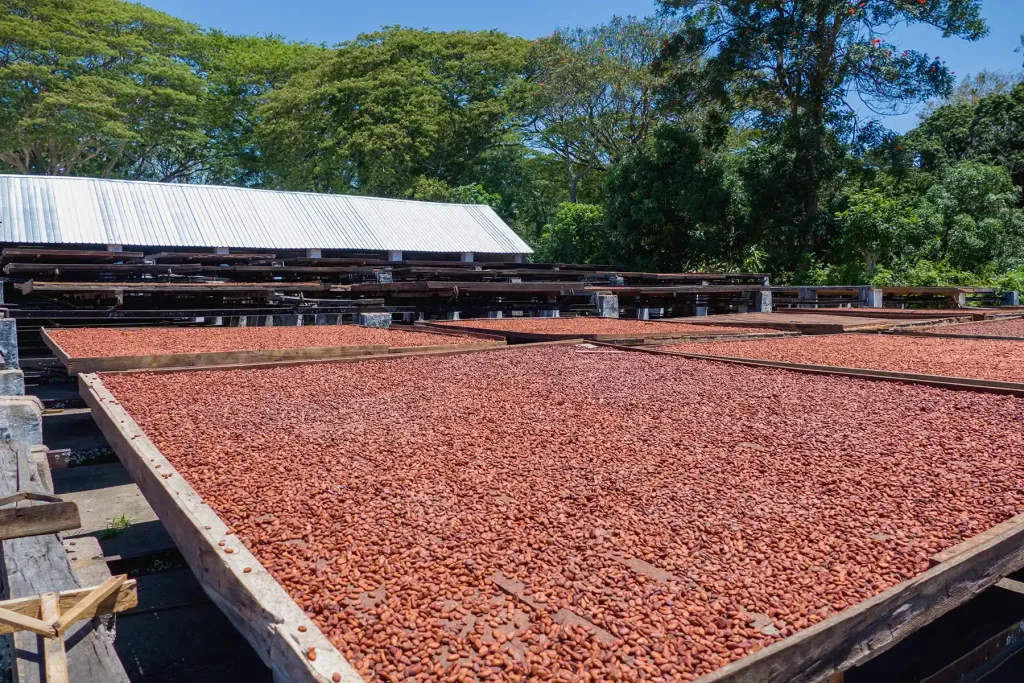
Open-air, raised-bed drying of cacao beans
How does MayHawk make chocolate?
We make every chocolate bean-to-bar, controlling the full process in-house — from sourcing raw cacao beans through to roasting, grinding, conching and tempering, with no stage outsourced. The full process, stage by stage, is on our Chocolate Studio page.
What ingredients should quality chocolate contain?
As few as possible, and natural only — no food additives, no bulking agents or fillers such as added cocoa powder or vegetable fats, and no emulsifiers such as lecithin. Our Buyer’s Guide to Chocolate sets out what to look for in any bar, from any maker.
Where our supply chain ethically sources from
We don’t purchase cacao from West Africa — the source of most of the world’s cocoa, and the region where supply-chain transparency is weakest and working practices are often poor.
Madagascar
Criollo / Trinitario variety
Grown in the Sambirano River Valley in the north-west, on the Grand Cru de Sambirano — a small, long-established cacao region with a reputation built over generations.
The growers ferment the cocoa beans carefully and not too long — enough to develop the cacao, not so much that the brightness is lost. These are the flavour precursors that we enhance in the roast.
The valley floor is volcanic and alluvial, fed by river silt. Cacao grown here carries a bright red-fruit acidity and a clear citrus lift. We roast to hold that brightness rather than disperse it.
Colombia
Colombia — Huila
Criollo / Trinitario variety
Fino de Aroma cacao from the Huila region in the south-west, high in the Andes near the Nevado del Huila volcano.
The soils are volcanic and mineral-rich, and the microclimates are varied from valley to valley. Huila also sits high enough that the nights turn cold, which slows the tree’s growing phase and concentrates the cacao — part of why its natural bitterness is reduced.
The cacao carries a subtle citrus and red-fruit acidity with a soft floral edge, kept in balance by its medium weight and a clean finish. Slow fermentation in the Andean cool builds that complexity before the beans ever reach us.
·
Colombia — Santander
Trinitario variety
Fino de Aroma cacao from Santander, in the foothills of the eastern Andes — the older heartland of Colombian cacao, around San Vicente de Chucurí. Lower and warmer than Huila, with deep valley soils along the Magdalena.
The beans are fuller and hardier than Huila’s, and the flavour is the opposite of bright — no red-fruit sparkle here, but a deeper, classic chocolate flavour that runs clean through, with none of the bitterness you’d expect from it.
Peru
Criollo / Trinitario variety
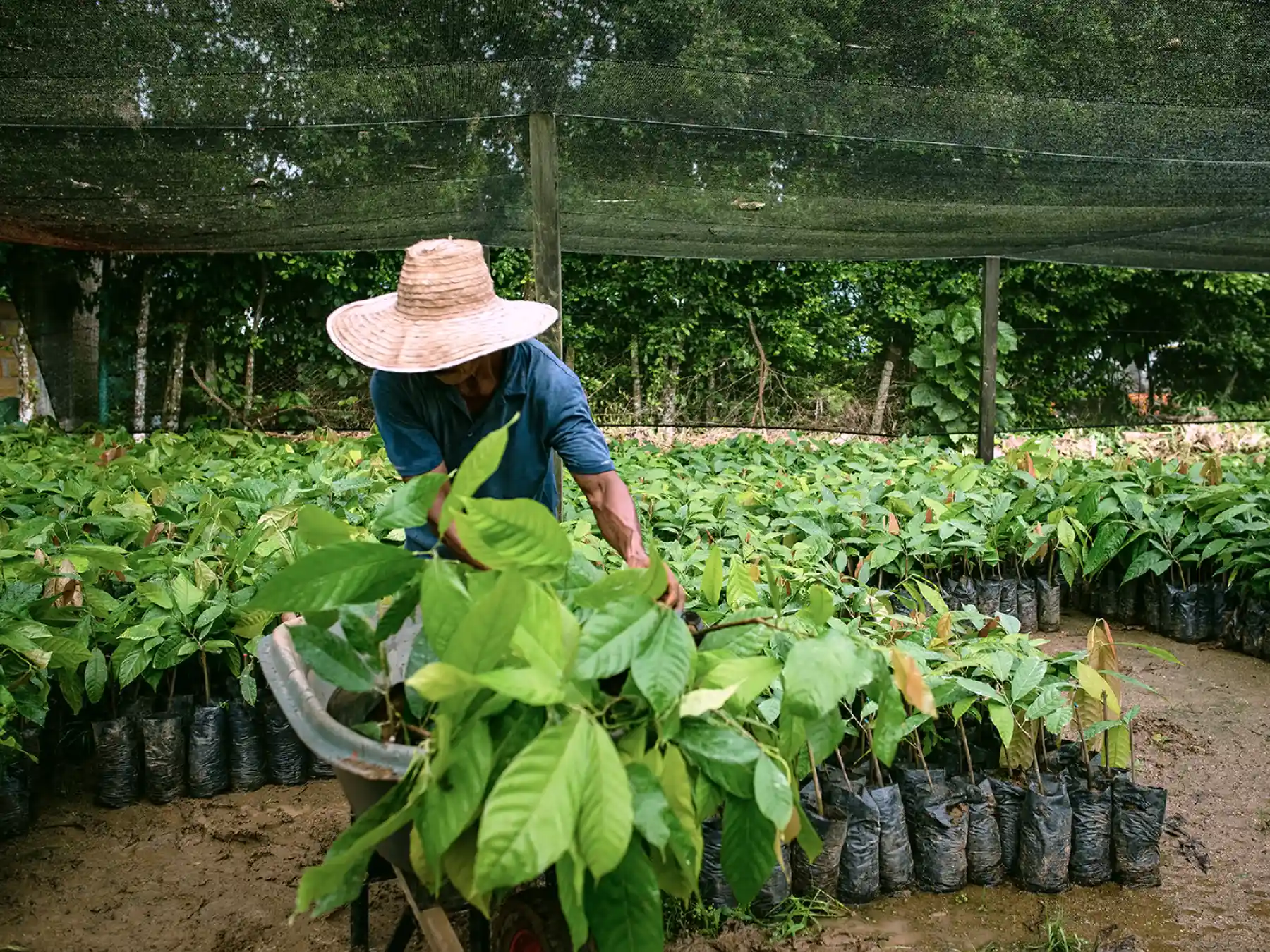
From the Upper Huallaga Valley in San Martín — an Amazon basin along the Huallaga River, in the lowland forest.
A fine-aroma Criollo-Trinitario mix, grown in changeable microclimates and deep fertile river soils. The cacao leans bright and fruit-forward with a citrus edge — but the acidity is gentler than other similar cacao like Madagascar, the fruit rounder, and it holds steady through the finish. A more even, settled version of the same brightness.
Venezuela
Criollo and Trinitario variety
From Sur del Lago, on the southern shore of Lake Maracaibo — one of the oldest fine-flavour cacao regions in the Americas, grown there for centuries.
The cacao is a natural Criollo-Trinitario blend. The soils are rich and the climate humid and tropical, and the beans carry the low bitterness the old Criollo lines are known for — here taken further, with almost none of the harsh acidity that usually comes with it.
This is cacao at the quiet end: nutty rather than bright, with a layered character that unfolds slowly. More going on than a pure Criollo, with none of the sharper edges.
Ecuador
Nacional variety
From the Guayas lowlands on the coast, around Camino Verde near Durán — cacao from Ecuador’s Nacional lineage, one of the few surviving fine-flavour varieties of its kind.
Grown in coastal alluvial soils. A soft, floral character — closer to orange blossom than fruit — with an earthiness on the finish that keeps it grounded.
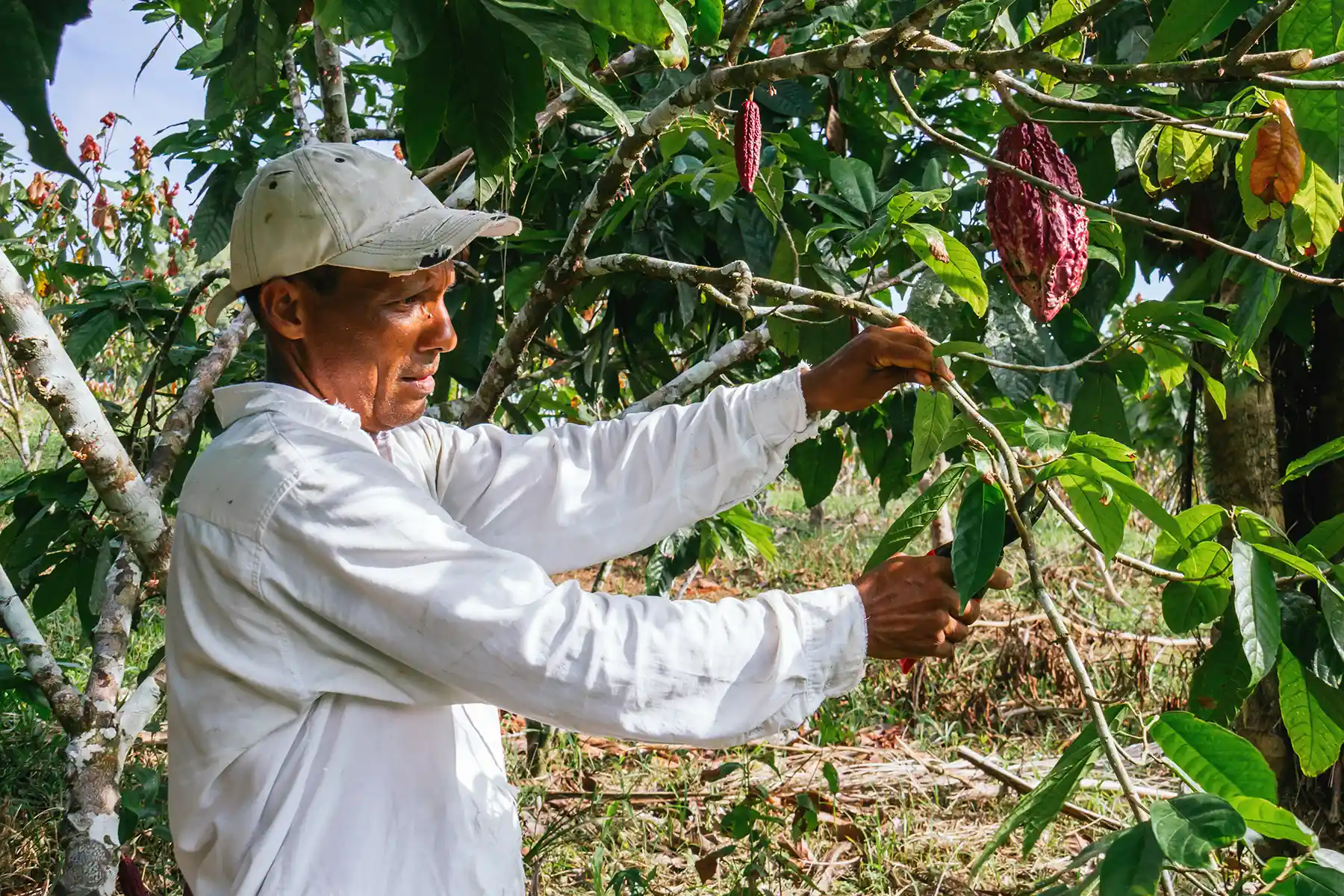
Trinidad & Tobago
Trinitario variety
From the Gran Couva area — the home of Trinitario cacao, the variety that took its name from the island after Criollo and Forastero were crossed here centuries ago.
The beans are slowly fermented and dried to build their character. Warm and rounded, with a natural darker caramel and a subtle spice on the finish.
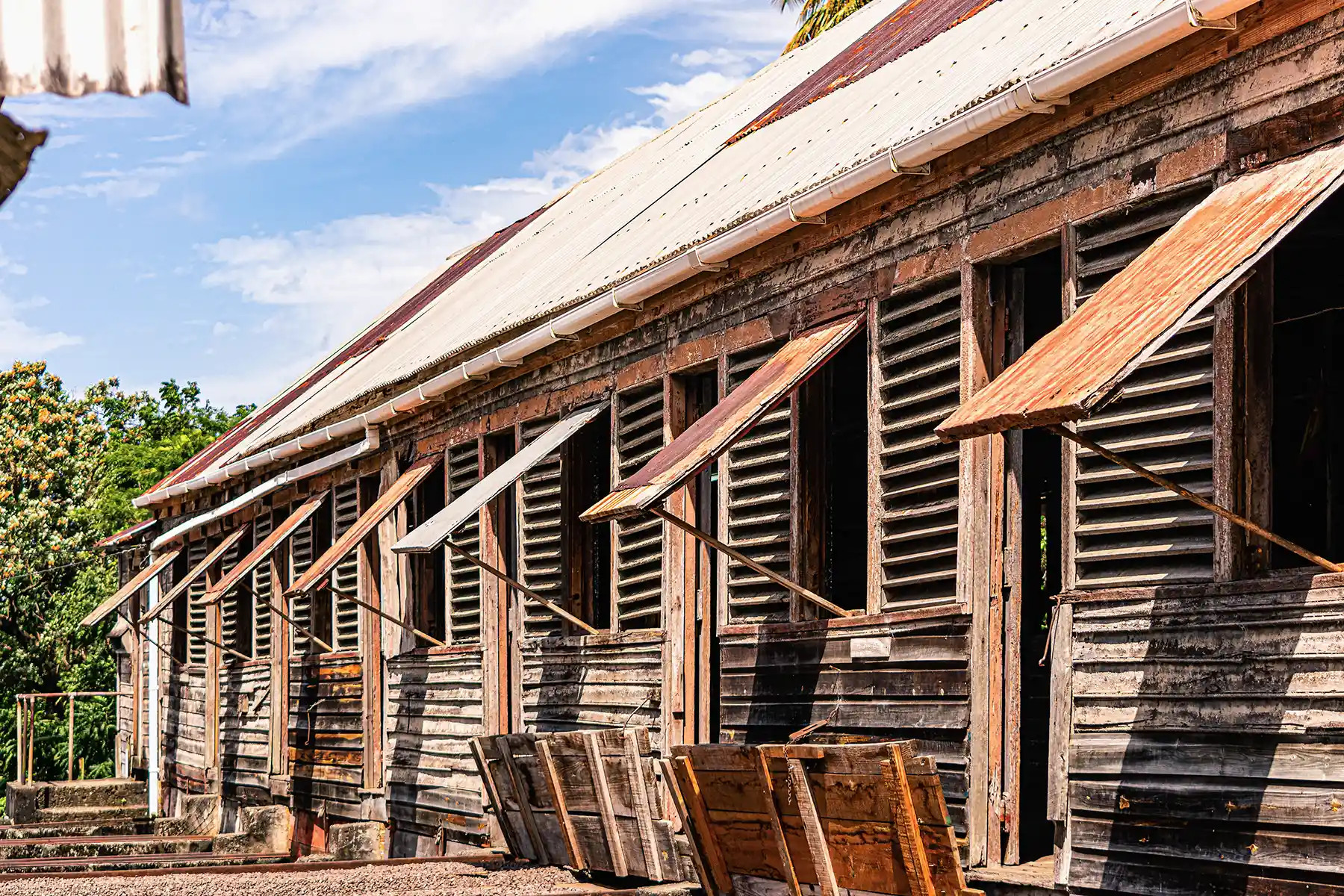
Dominican Republic
Trinitario variety
Fine-flavour Hispaniola beans from the Cibao Valley, just north of San Francisco de Macorís — the centre of the country’s organic cacao.
Hispaniola is the fully fermented grade of Dominican cacao. That longer ferment is what builds the flavour: the sugars and proteins in the bean break down over days, developing the depth and losing the bright, sharp acidity you’d find in Sánchez cacao.
What’s left is a robust, classic chocolate base — warm and earthy, with none of the sharpness.
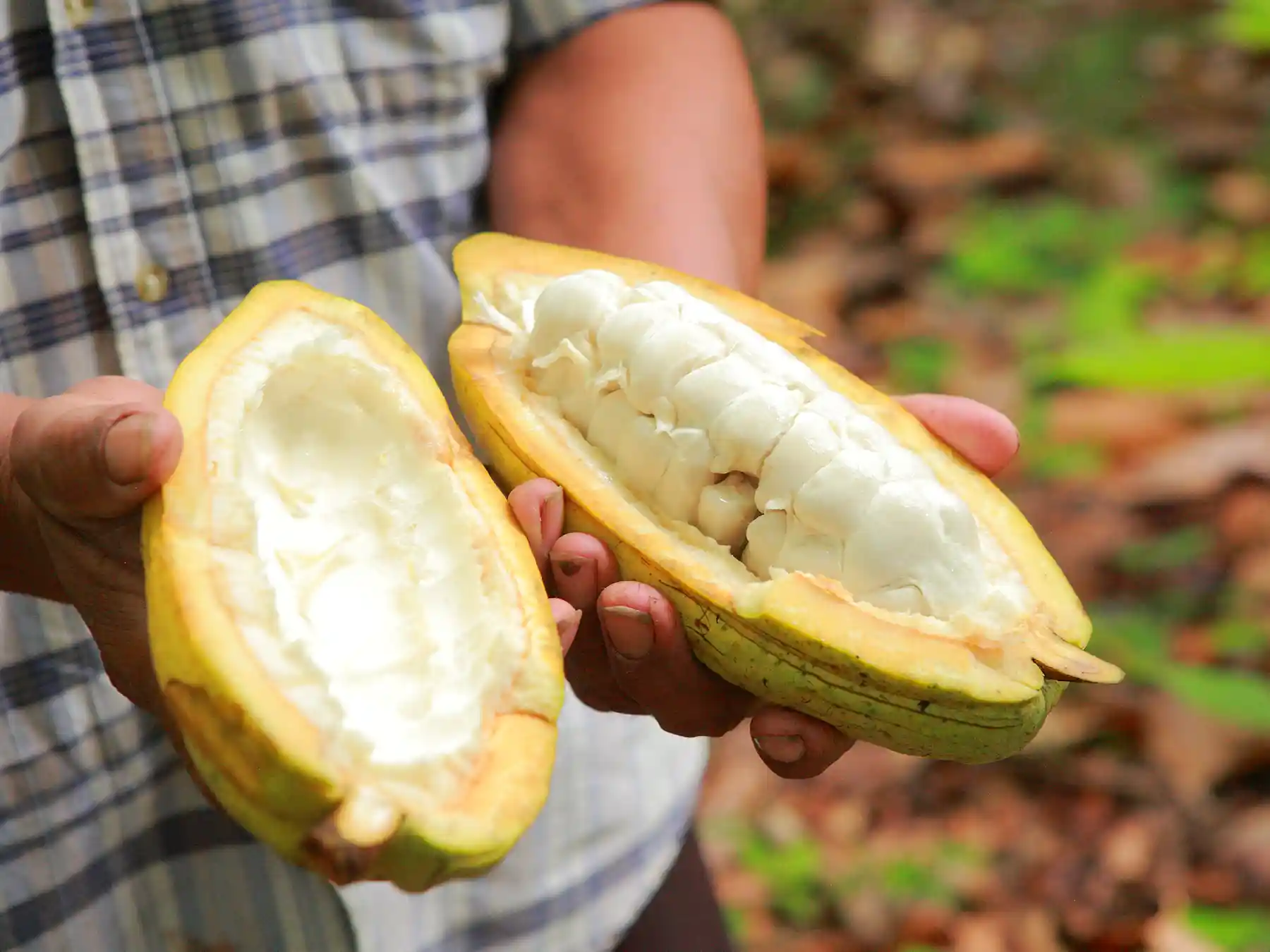
Tanzania
Trinitario Variety
Kokoa Kamili, from the Kilombero Valley in southern Tanzania, at the foot of the Udzungwa Mountains. Cacao has grown here since the 1880s. Kokoa Kamili runs the region’s only commercial fermentary, working directly with over two thousand smallholder farmers, fermenting each lot in banana-leaf-lined boxes across a three-tier cascade system.
DNA analysis shows the tree stock to be predominantly Trinitario — a classic Amelonado x Criollo cross — with a slight presence of Neo-Nacional. Cacao produced in this region is highly prized as a fine cacao variety.
The flavour runs fruit-forward — berries, apple, plum — with darker woody notes and a light, nutty-cocoa depth.
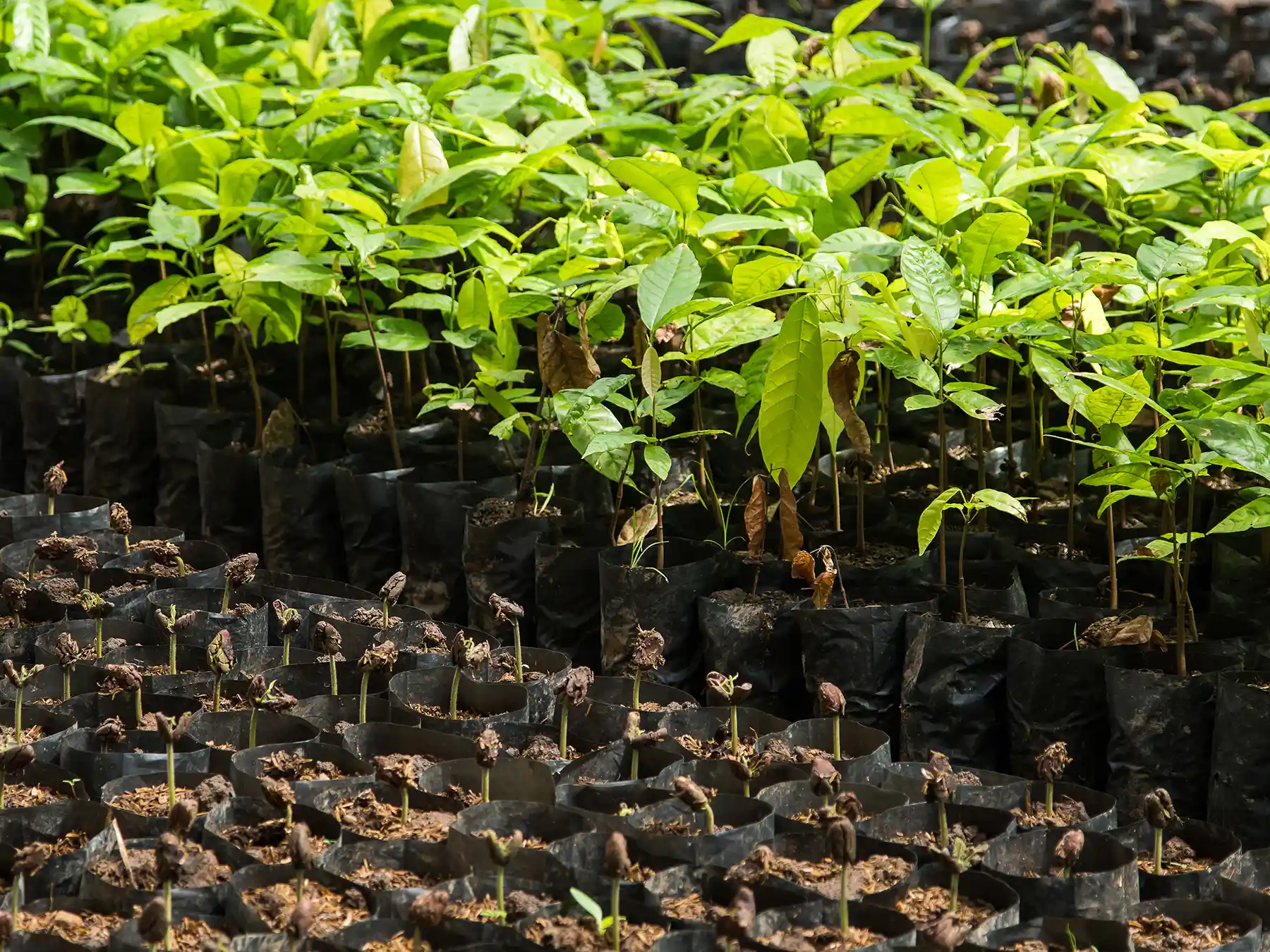
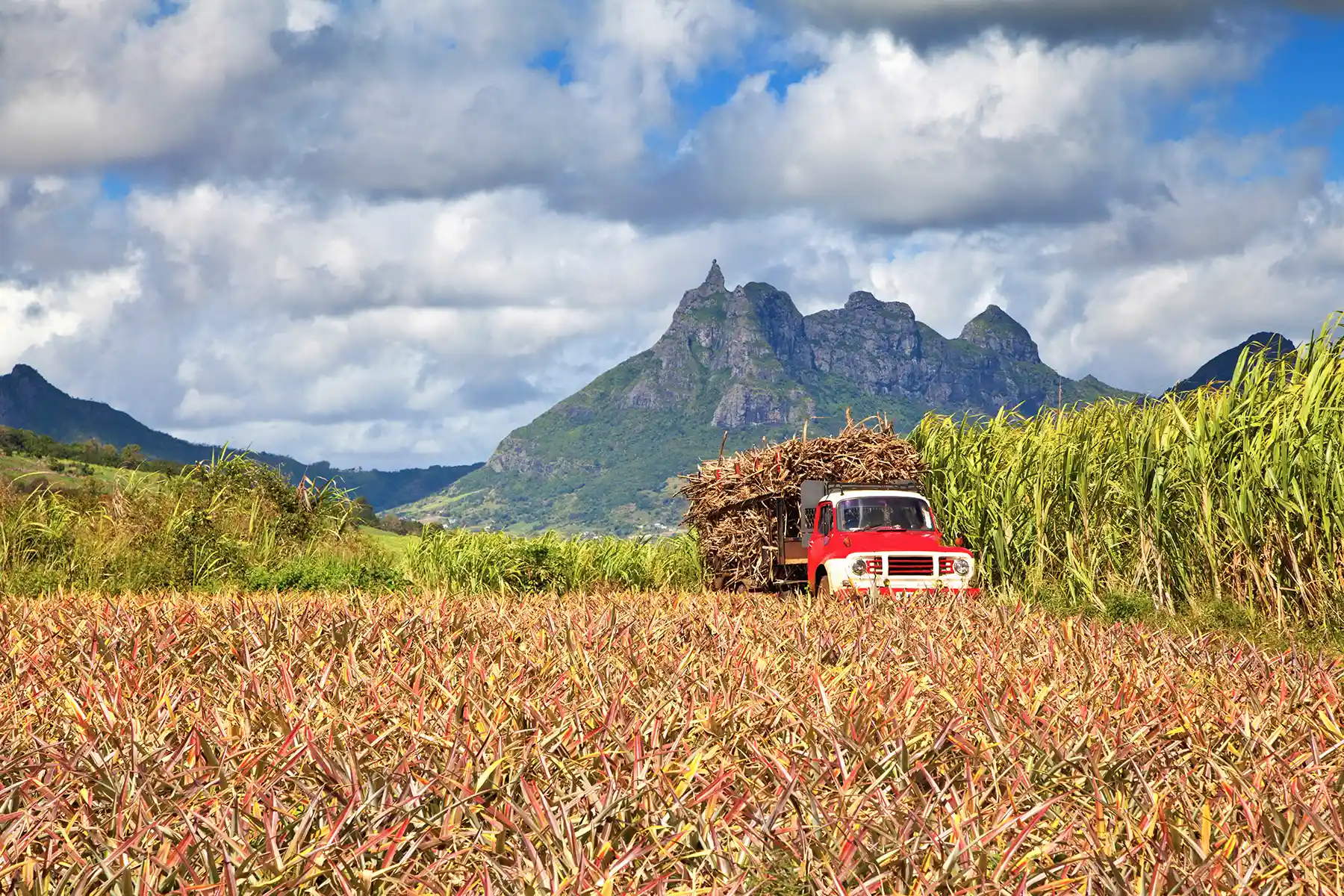
Cane Sugar – Mauritius
We use unrefined cane sugar from Billington’s, a British company milling sugar since 1858.
Refining strips the molasses out of cane sugar, leaving a flat, neutral sweetness (white cane sugar). Billington’s leave it in — and offer the full range, from golden through to its darkest muscovado, as the molasses content rises. We choose along that spectrum by our recipe intention: a lighter sugar where the cacao should lead, a darker one where we want its depth in the bar.
The molasses is what carries the difference — the trace minerals, and a fuller flavour that works with the cacao rather than just sweetening it.
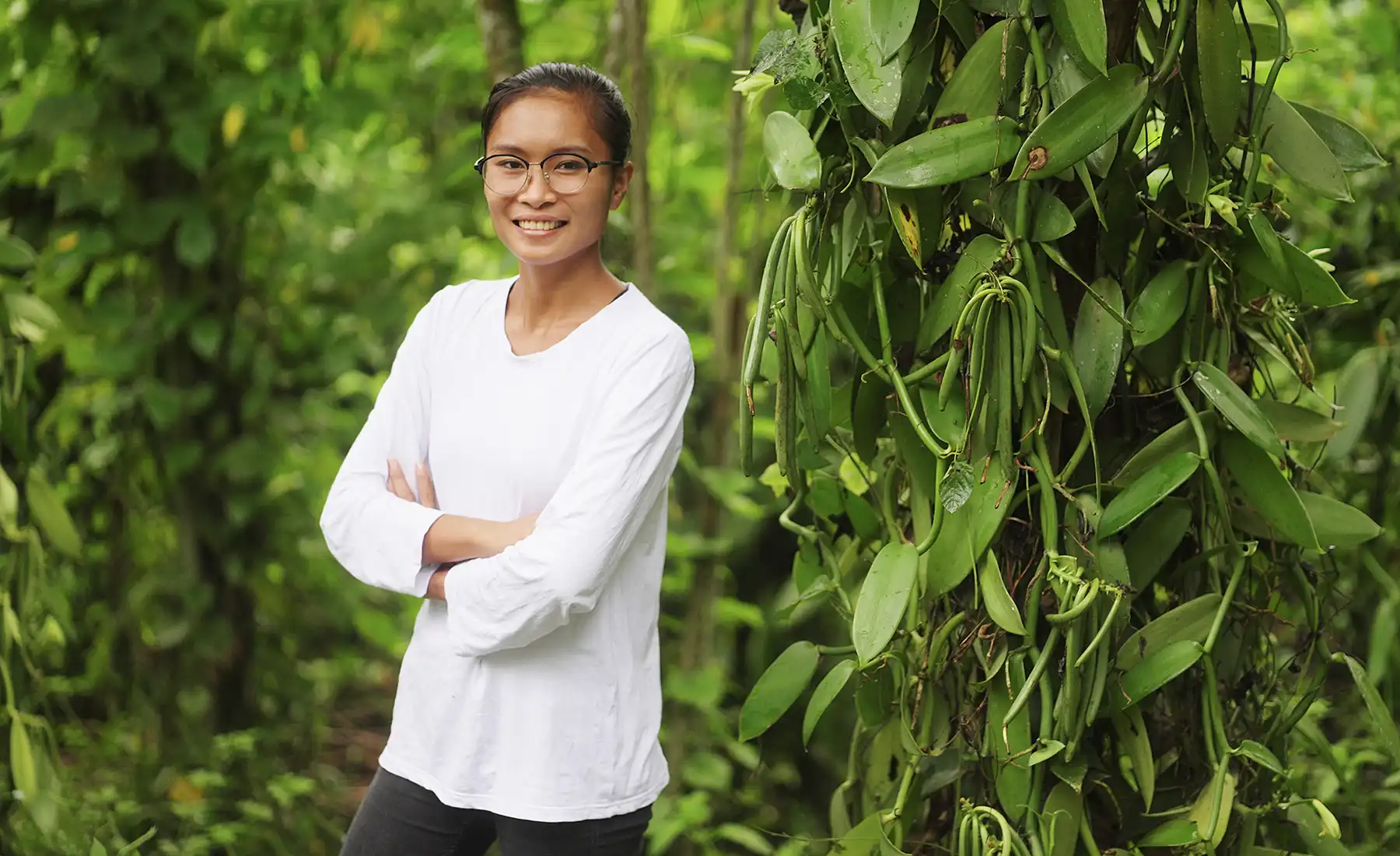
Vanilla Beans – Madagascar
Our Bourbon vanilla beans come from the Sava region in Madagascar’s humid northeast, the world’s leading source of Vanilla planifolia. The tropical climate, generous rainfall, and fertile loamy soils create ideal conditions for cultivating this prized variety.
We use only natural vanilla beans — never extracts or artificial flavourings — to capture their full character. Madagascan Bourbon vanilla is known for its deep, creamy aroma with warm, sweet notes of caramel and subtle floral undertones, which enhances the flavour of the chocolate we use it in.
Our own ingredients
We organically grow many of the herbs, spices, and botanicals used in our chocolate, while also trialling new flavours in our R&D.
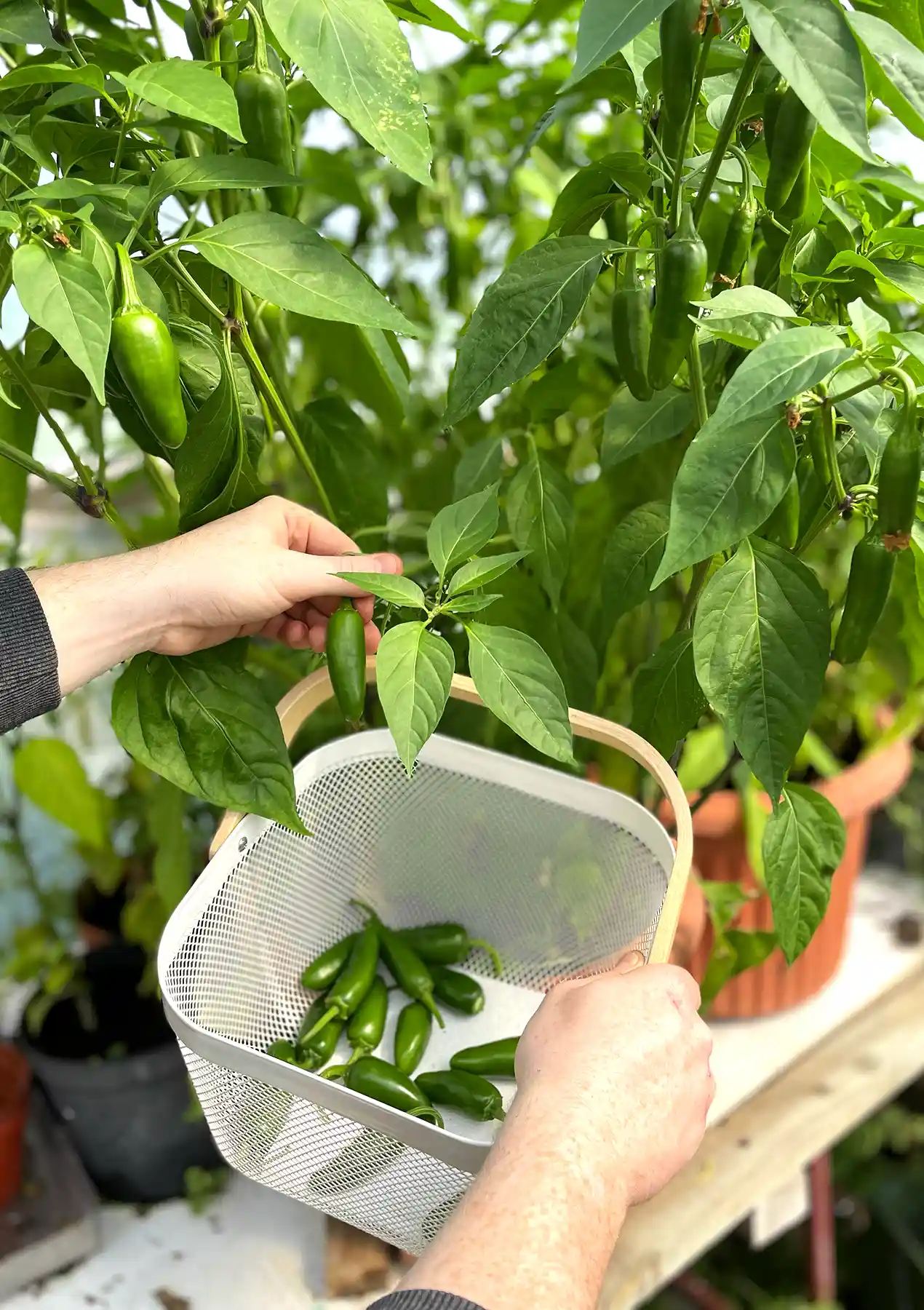
For example, all the fresh mint in our chocolate is grown, bringing a clean, aromatic lift to the other botanicals we use. The jalapeño chilli peppers for our chocolate are also grown here, delivering gentle heat with a bright, fresh edge.
Several other key ingredients are grown organically by us, ensuring a unique freshness and character from the very start.