A comprehensive approach.
From ingredients to materials.
Carbon neutral, Sustainability, Recycling & Material Impact.
Is MayHawk working towards carbon neutrality?
Yes — we’re working to bring our net emissions to zero across our whole footprint by 2032, and to be net beneficial beyond that. We’ve measured our emissions across all three Scope categories and, since 2021, have been reducing them at the four largest sources: manufacturing energy, ingredient farming, packaging, and transport. Where emissions can’t yet be avoided, we invest in independently verified removal projects — reduction first, offsetting only for what’s left.
What is MayHawk doing to reduce its emissions?
Around 60% of our electricity now comes from renewable sources, and we’re phasing out fossil fuels wherever we can, on-site and through certified suppliers. Alongside energy, we’re working on lower-impact ingredient sourcing, more efficient manufacturing, and lower-carbon transport across the supply chain. The long-term aim is every stage — roasting, conching, tempering, lighting and heating — running on clean, low-carbon energy.
Is MayHawk packaging recyclable and plastic-free?
Yes to both. Our packaging has been 100% plastic-free since 2020, and it’s recyclable at every touch point — chosen so it can be recycled easily at home. Over the last three years we’ve also cut our packaging mass and volume by around 35%. Product-specific recycling guidance is on each product’s page.
How does MayHawk offset its carbon?
Offsetting comes only after reduction — it’s for what’s left, not a substitute for the harder work. We grow oak trees from local acorns in a nursery on our own site, having planted out more than 80 saplings over the last decade, and we support established large-scale tree-planting and reforestation schemes. For remaining emissions, we invest in proven, independently verified offsetting projects.
Does MayHawk send waste to landfill?
We’re working towards sending none. Our Zero Waste Implementation Plan, running since 2021, aims to send zero waste to landfill from manufacturing through to sale — a hard target, with many factors outside our direct control, that we’re progressing through a structured long-term plan. In 2024, composting reached a waste-diversion rate of around 80%, with by-products like cocoa bean husks turned into compost that feeds the greenhouse where we grow some of our own ingredients.
Carbon Neutral by 2032
At MayHawk, we’re working to bring our net emissions to zero across our entire footprint by 2032 and to be net beneficial beyond that.
We’re working to be carbon neutral across our entire company footprint.
To do this, we’ve measured how and where our operations are responsible — directly or indirectly — for greenhouse gas emissions. Since 2021 we have taken full responsibility for those areas, to be carbon neutral as a company by 2032.
Using the Scope 1, 2 and 3 categories, we’ve built plans to reduce or offset emissions across all three. For what can’t yet be avoided, we invest in high-quality projects that remove greenhouse gases from the atmosphere.
Reducing Emissions
After studying the Scope report, we’re focused on the four largest sources of our emissions: the electricity used to manufacture our products, the farming of supply-chain ingredients, the production of packaging, and transport.
This means working with lower-impact suppliers, improving how efficiently we manufacture, moving to cleaner energy, and rethinking shipping to avoid high-carbon transport.
Every choice we make is measured against its carbon footprint, bringing us closer to net zero. We use Apple’s White Paper: Carbon Removal Strategy and their Framework Proposal as a guide.
How We Hold Ourselves Accountable
Our path to carbon neutrality began in 2021, by changing how we power our operations. Wherever we can, we’re phasing out fossil fuels and expanding our use of renewable electricity — from solar, wind and biomass, both on-site and through certified suppliers.
Now 60% of our electricity comes from renewable sources. Our long-term goal is simpler still — every stage of production, from cacao roasting, conching and tempering to lighting and heating, running entirely on clean, low-carbon energy.
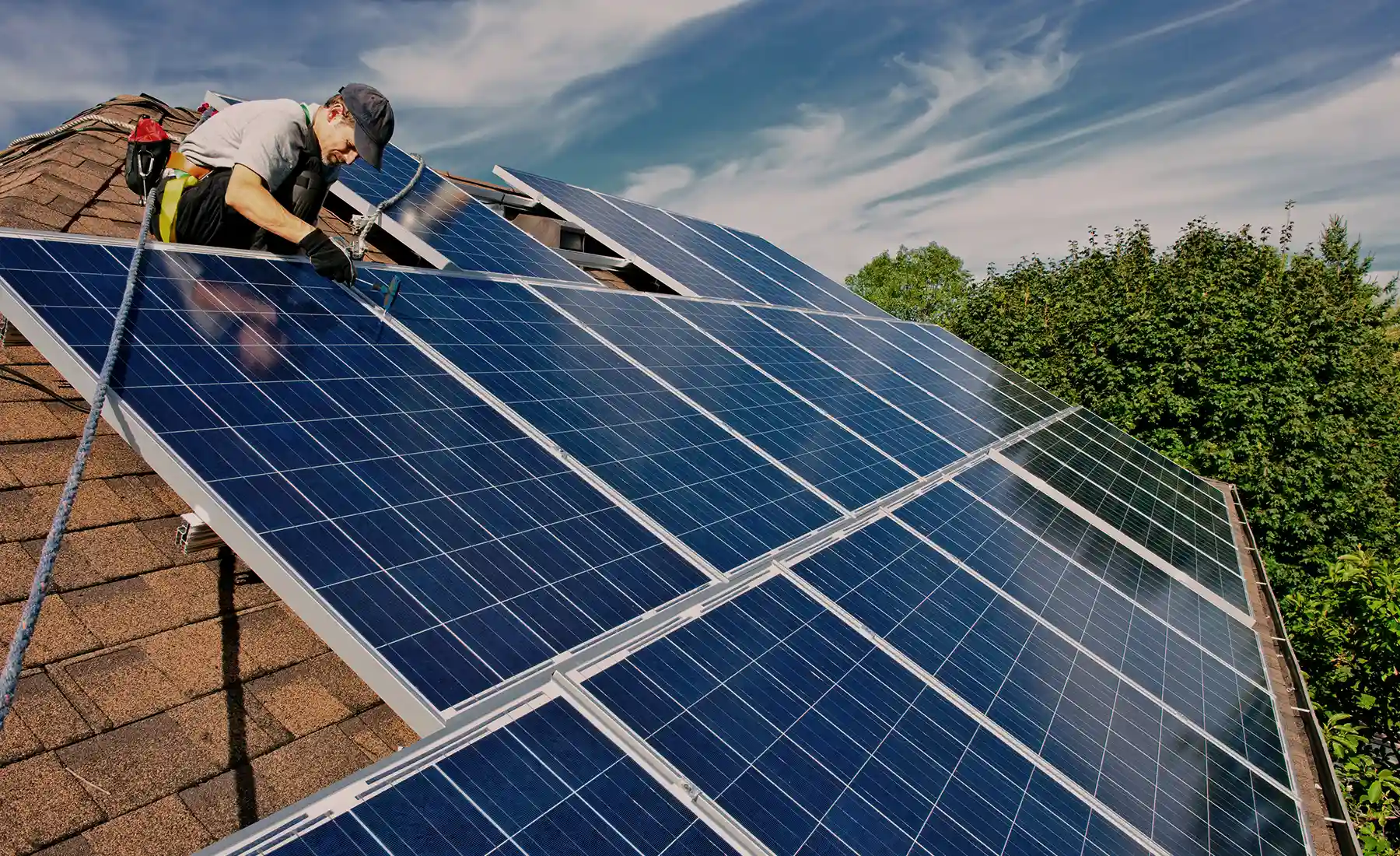
Solar Panels at MayHawk
Offsetting
Offsetting means supporting projects that remove greenhouse gases from the atmosphere and help repair natural ecosystems.
Avoiding and reducing emissions always comes first — offsetting is for what’s left, not a substitute for the harder work. For anything that remains, we invest in proven, independently verified carbon-offsetting projects.
Oak saplings planted out at MayHawk
Oak Tree Planting
We offset carbon with our own work — growing oak trees from local acorns in a nursery on our production site. As they grow, oak trees draw carbon dioxide from the air and lock it away in their wood for centuries. Over the last decade we’ve grown more than 80 oak saplings and planted them out near our site — each one a small step towards restoring the balance.
We also support The Woodland Trust (UK) and the Rainforest Alliance (Global), both running large-scale tree-planting schemes. Together these efforts capture carbon, protect biodiversity and help rebuild the natural ecosystems that sustain us all.
Sustainability at MayHawk
We design our products with the environment in mind, starting with recycled and responsibly sourced materials. We choose materials and build processes with intent — to rely less on virgin resources, to recycle more, and to keep what we make sustainable for the long term.
Sustainable Growth
We have a natural curiosity which leads us to work with ingredients and materials that can keep being produced without depleting the earth’s natural resources.
Within our supply chain, we back the regeneration of existing cacao plantations over expansion into new rainforest regions and the further deforestation this expansion causes.
We also choose recycled and responsibly sourced materials for our packaging — lower-impact wherever we can, and less reliant on virgin resources across the supply chain.
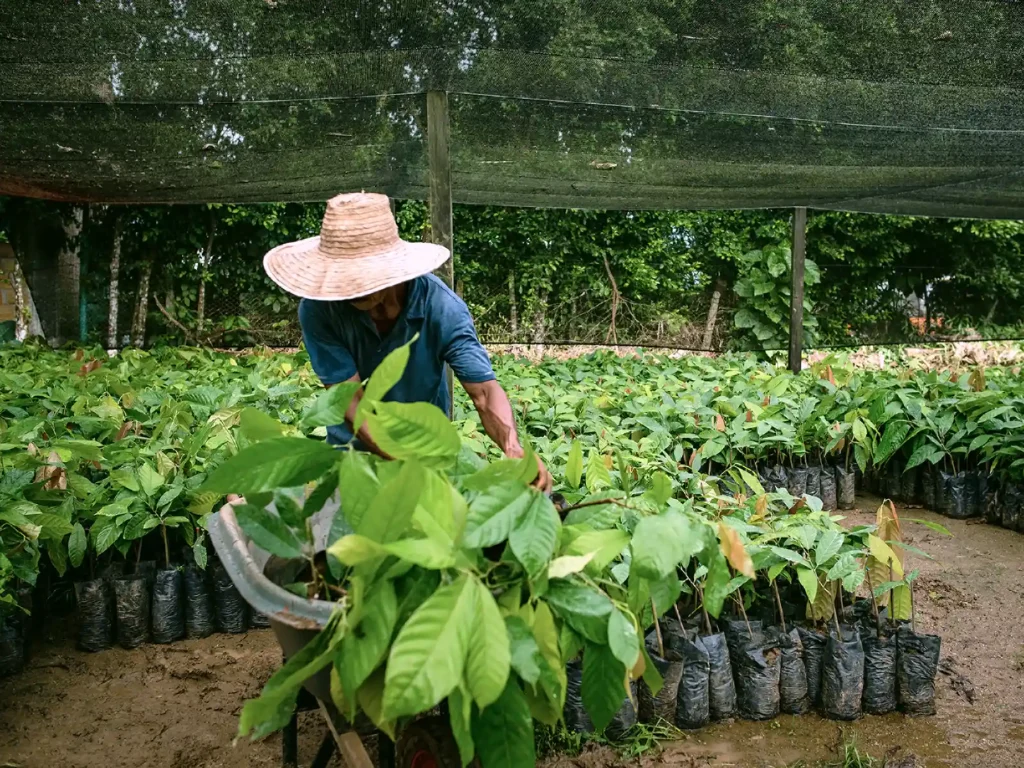
Cacao reforestation schemes
We’re also working to cut indirect emissions — through renewable energy and more efficient logistics, cleaner energy in how our materials are made, and better transport across our wider supply chain.
Growing our own ingredients
We organically grow herbs, spices and other botanicals for our chocolate. Growing on a small scale lets us experiment with flavour, lower our sourcing impact, and bring more of the process under our own care.
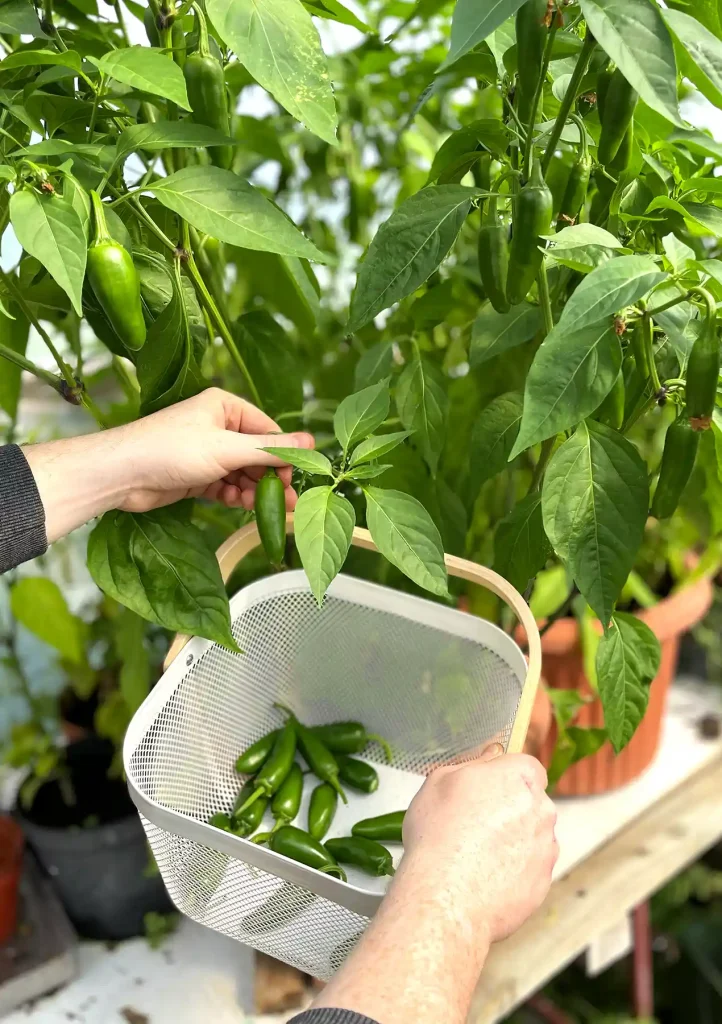
Growing our own ingredients
High standards
We hold strict sourcing standards for every ingredient and material we use. Our aim is to move toward low-carbon materials with recycled content, and to reduce waste in how we make our chocolate.
Ethical Partnerships
Building this into every product starts well before the chocolate is made. We research the origins of every ingredient and material, and work closely with our suppliers — from cocoa farmers to packaging specialists — who protect ecosystems, support fair labour and use low-impact methods.
Circular Supply Chains
We make our chocolate from natural raw materials and ingredients, using bean-to-bar methods. One of our long-term goals is a supply chain that’s genuinely circular — where every MayHawk product is both made from recycled materials and feeds back into them, keeping those materials in use for longer.
This depends on the supply chain itself — which is why we work with farmers, plantation owners, cooperatives and packaging specialists who share the same long-term view.
Zero waste to landfill.
In 2021, we started the ambitious Zero Waste Implementation Plan and we are continuing our steady progress towards this goal.
Monitoring Impact
We measure as we grow — tracking the waste our operations generate, and the environmental impact of the ingredients and materials we source. Continued monitoring keeps our growth aligned with the plan, and shows us where it needs to change.
Eliminate Waste
In 2021 we started the Zero Waste Implementation Plan, with every member of staff taking part. The aim is to send zero waste to landfill, from manufacturing through to sale. It’s a hard target — many of the influences sit outside our control, and a lot of suppliers are involved — but we’re making steady progress through a structured, long-term plan.
Recycling & Material Impact
We choose materials that are already recycled, or that can be recycled again. The detail matters — and over the years we’ve reduced what we use, removed what we don’t need, and made what’s left easier to recycle.
Recycling Initiatives
Since 2017 we’ve increased our use of renewable and recycled materials, especially in our packaging.
From 2021, with the push toward Zero Waste to Landfill, we’ve mapped every source of waste we produce and sorted it stream by stream.
In the last three years we’ve cut our packaging mass and volume by around 35%, with new boxes that waste less space and fit our products better. We use Apple’s White Paper: Paper and Packaging Strategy as a guide.
Our packaging is recyclable at every touch point, so it can have a second life once it’s done its job.
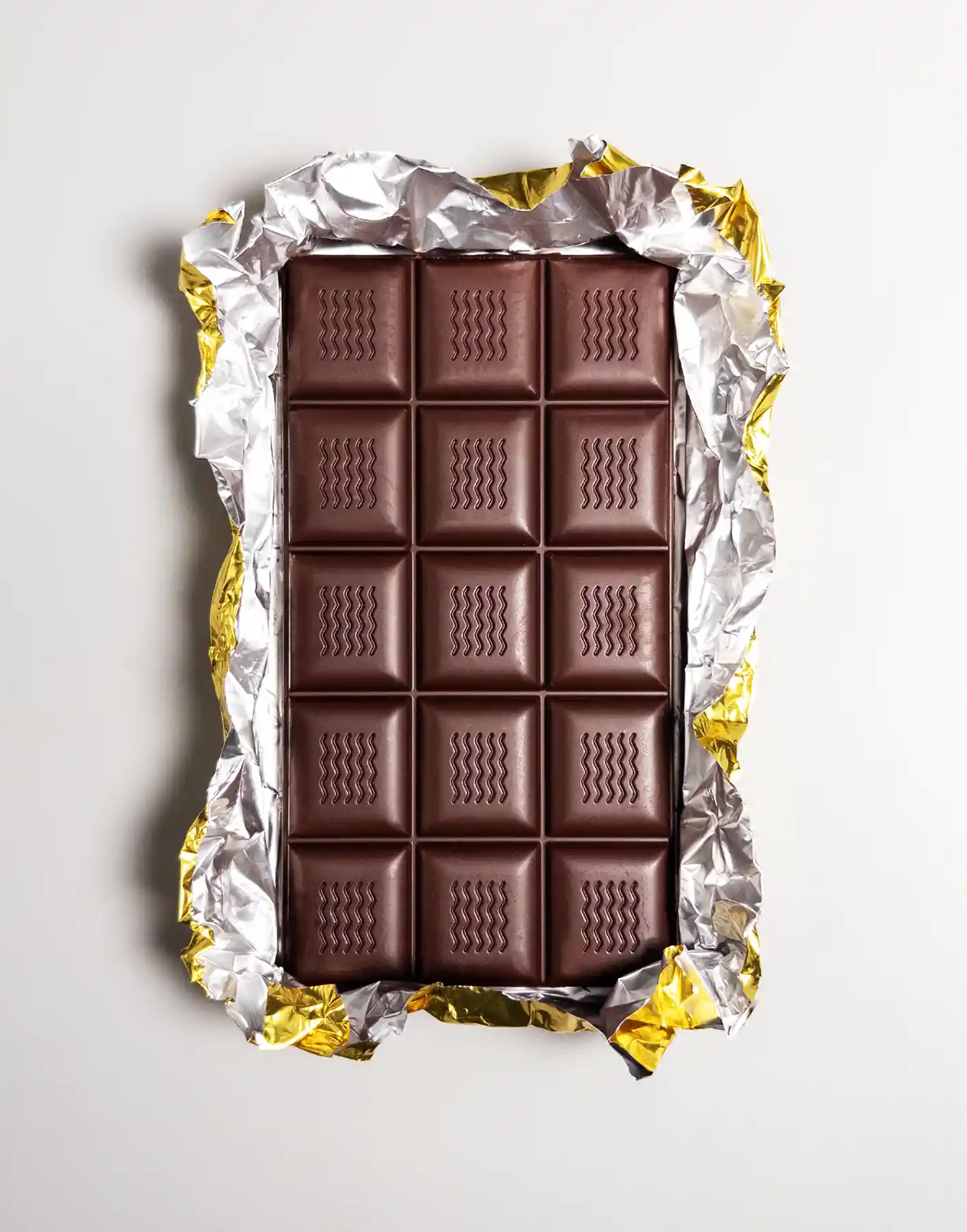
Recycling our aluminium foil outer wrapper
Material Impact
Understanding the impact of every material we use is a key part of how we design. Aluminium foil is a good example — it protects the chocolate completely, and it can be recycled again and again.
By sourcing foil that already contains recycled content — and, one day, foil smelted with no greenhouse gas emissions — we move closer to a closed-loop, low-carbon system.
This is why we removed plastic from our packaging — 100% plastic-free since 2020 — and chose materials people can recycle easily at home.
Closing the Loop
Closed-loop materials can be reused or recycled again and again, so fewer new materials are ever needed.
Because our products draw on so many natural, renewable resources, caring for the environment is a responsibility we take seriously.
What we keep working on: research and development, growing more of our own ingredients, and finding better, more recyclable materials — without giving up the quality or the simplicity of what we make.
The materials we choose matter — but so does where they end up. We design with the end in mind.
Food Waste & Composting
Beyond packaging, we also look at the food waste our production creates. In 2024 our composting reached a waste-diversion rate of around 80%. The clean, natural by-products of chocolate making — cocoa bean husks, for example — are collected and turned into nutrient-rich compost.
That compost then feeds the greenhouse where we grow some of our own ingredients — closing a small loop from production back into the next harvest. We’re looking at ways to widen it too, working with local gardens and farms.
By turning what could be waste into something useful, we close a small loop — less to landfill, healthier soil, and more life in the ground around us.
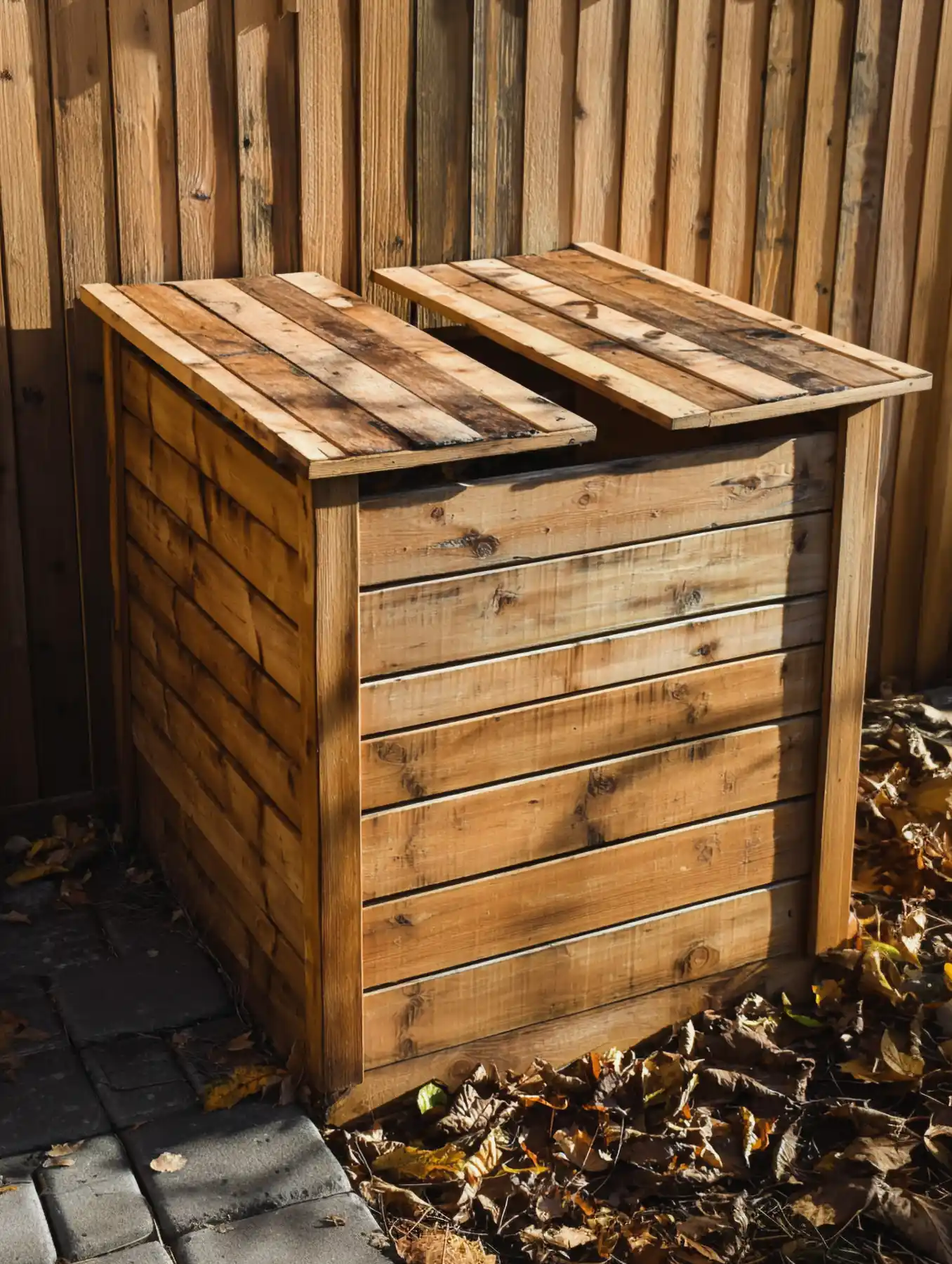
Recycling Food Waste Into Compost at MayHawk