Studio Projects Bar 7
£27.00
A 3 Bar gift set with different cacao expressions. Colombia, Peru, Madagascar. All at 70% cacao. All made with just two ingredients. The only variable is where the cacao comes from. And that is the difference which is worth exploring.
Columbia 70% | Trinitario
Peru 70% | Criollo / Trinitario
Madagascar 70% | Criollo / Trinitario
Apple Pay, Google Pay and Major Cards
Home Delivery: Tracked 24 (£4.75)
Dispatched in 24 hours. More Information
Complimentary Delivery on UK orders over £55
Need Help? Contact Customer Service
Take a closer look
Using just two-ingredients is a stripped back approach to craft chocolate making, only what is essential remains, and here it is being applied to three different origins, producing three different bars. Colombia arrives with classic dark chocolate depth and roasted nut warmth. Peru is lighter, almond mid notes and a red-fruit brightness that arrives late and lingers. Madagascar sits between the two in body, its own acidity carrying a tropical character neither of the others has.
Same percentage. Same process. Same two ingredients. Three entirely different expressions of what cacao can be.
Ingredient List
Columbia: Cocoa Beans, Cane Sugar.
Peru: Cocoa Beans, Cane Sugar.
Madagascar: Cocoa Beans, Cane Sugar.
All Natural Ingredients
No lecithins. No emulsifiers.
No additives. No artificial flavours.
Origins & Variety
Tasting notes: A recommendation is to open all three chocolate bars and taste them side by side. The single-origin cacao does the rest. Break a piece of each bar. Let it melt completely before forming an opinion. The finish is where the origin speaks most clearly.
Huila, Colombia
Variety: Trinitario cocoa beans sourced from the Huila region, Colombian Andes.
Fermentation: linear boxes. Drying: raised wooden beds with greenhouse coverage.
Expression: Rich and creamy, with classic dark chocolate depth and a roasted warmth that lingers. A subtle spice arrives in the finish, with a clean astringent edge that confirms the origin.
Flavour Profile
Huallaga Valley, Peru
Variety: Criollo and Trinitario cocoa beans sourced from the Upper Huallaga Valley, San Martín.
Fermentation: five-tiered boxes. Drying: raised cement patios with coverage.
Expression: light chocolate base notes, almond mid notes, red-fruit top notes.
Sambirano, Madagascar
Variety: Criollo and Trinitario cocoa beans sourced from the Sambirano Valley.
Fermentation: three-tiered boxes. Drying: raised beds, open air.
Expression: medium chocolate base notes, light acidic mid notes, tropical fruit top notes.
What does cacao variety mean?
Like wine grapes, cacao has genetic variation that can influence flavour, aroma, acidity and bitterness. The names Criollo and Trinitario describe two broad groups of cacao, but variety alone does not determine how a particular chocolate will taste. Where the cacao grows, how it is fermented and dried, and how the chocolate maker roasts and processes it all influence what eventually appears in the bar.
In broad terms, Criollo cacao is often associated with a more delicate flavour profile, lower bitterness and aromatic complexity. Trinitario has mixed ancestry and encompasses a much wider range of characteristics, often combining pronounced chocolate flavours with fruit, nut or floral notes.
This is a deliberately simplified description of cacao genetics, using broad categories to make the differences easier to understand. For a more detailed explanation, read our article: Genetics of Fine Chocolate.
Why do fermentation and drying methods differ between origins, and what does that mean for the chocolate?
Cacao fermentation and drying are not standardised. Each farm and cooperative works with its own climate, conditions and traditions, and the methods used influence the flavour of the finished chocolate.
During box fermentation, cacao is turned at intervals to introduce oxygen and regulate temperature and acidity. Different origins use different systems. Colombia turns the beans within a single-tier box, Peru uses five tiers for gradual movement, and Madagascar uses the three-tier cascade associated with the Sambirano Valley.
Drying matters just as much. Beans must lose moisture slowly and evenly. Too fast and acids can remain trapped; too slow and mould becomes a risk. Colombia uses greenhouse-covered raised beds to protect against Andean rainfall, Peru uses covered cement patios to manage valley humidity, and Madagascar uses open-air raised beds under the Sambirano sun. All of these unique flavour precursors arrive in the bar. Read more on: Single-Origin Regions.
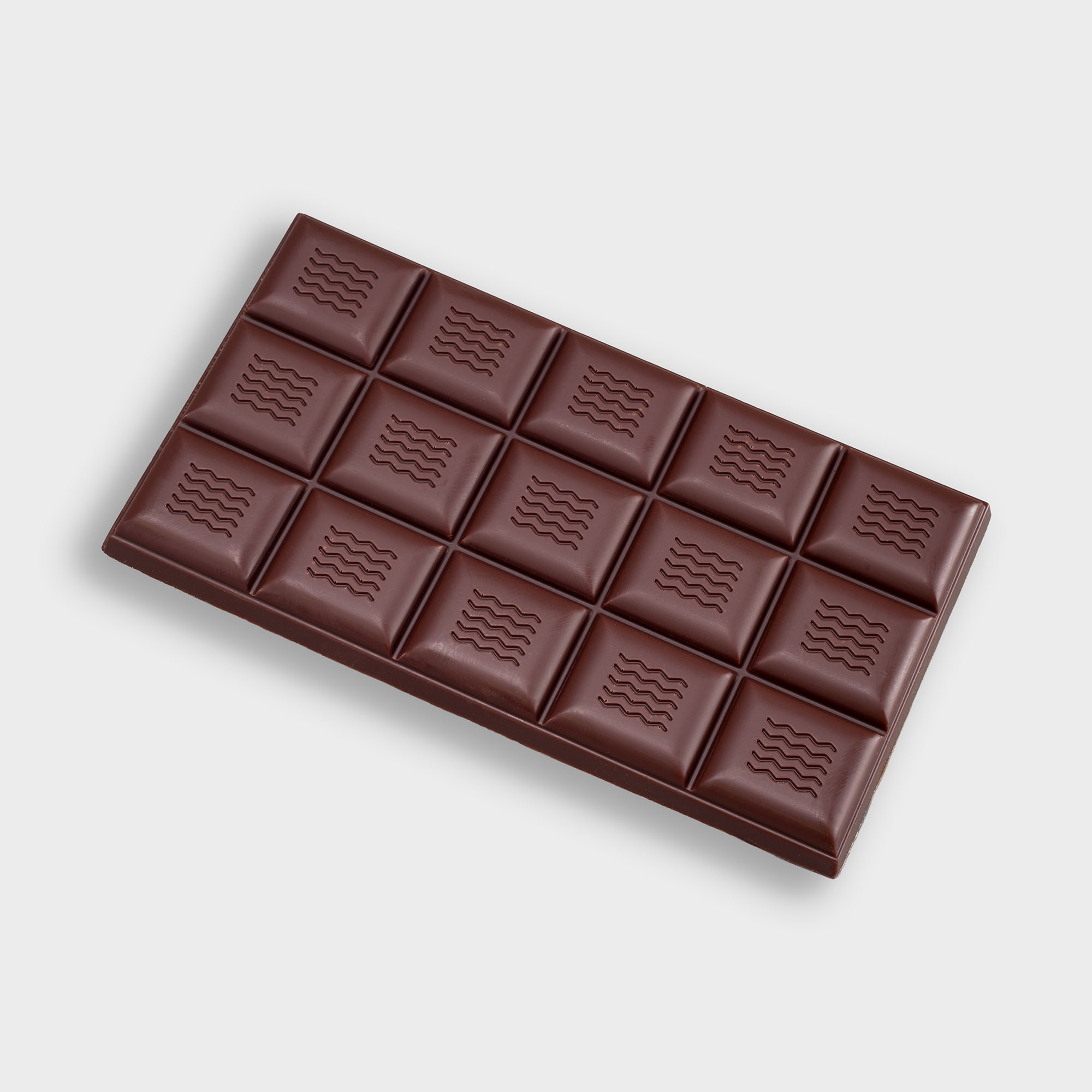
Average Nutritional Information
Minimum Weight of Bar = 70g | 2.5oz
Typical Serving Size = 35g (1/2 Bar)
Approx Calories per 35g = 204 Calories
Nutritional
Information
per 100g
Energy
2460 Kj
588 Kcal
Fat
Fat 43g
(Sat Fat) 32g
Carbs
Carbs 40g
(Sugars) 34g
Fibre
Fibre 9g
Protein
Protein 6g
Salt
Salt 0.1g
Allergens & Information: Our chocolate is made in a small studio where tree nuts and milk are handled. We take every care to minimise cross-contact, but we cannot guarantee that our products are entirely free from allergens.
The Story of the Bar
MayHawk’s two-ingredient dark chocolate begins with a single conviction: when you want to taste the cacao of a region, and how MayHawk interprets it, then the cacao should carry the bar entirely, without assistance. Nothing is added that would obscure what the origin is trying to say.
When the recipe is this restrained, the origin has nowhere to hide. The focus then becomes on how the chocolate reflects the fermentation method, the drying process, the cacao variety, the micro-climates and soil. All of it arrives in the bar. The Colombia, the Peru, and the Madagascar are not variations on a theme. They are three distinct cultures and farming methods, made by the geography of three distinct places.
Two ingredients. Three origins. The restraint is what makes the difference in each batch.